1. Steven Milliband suggests that all Londoners will one day carry carbon credit cards, probably attached to their Oyster, all-seeing-eye ID cards (trying saying that in one go). I'm happy with the idea of an individual carbon allowance but more worried about the idea that there will be benefits to not using your carbon allowance, such as being able to sell points. I hate to sound reactionary, but wouldn't this become some sort of alternative benefits system. Either you charge people to use their points, which is a disincentive to work for those who often have the least choice in their working hours or locations*. Or people can sell their points, which is (sounding more like the Mail by the word) an incentive to do nothing. If you sit in your flat, lights off, TV off, heating off and don't travel anywhere, you get paid by some gas-guzzler from Hammersmith. Is that going to keep the economy moving? Or, you have no incentives or disincentives but simply an allowance which, if my generalised view of the British is correct, will be treated as a target. I'm not sure of the way round it but I have a feeling that anything styled like credit cards is bad news in the current English climate.
* That assumes you have to travel to find the best jobs, which is currently often the case. Maybe the carbon allowance should provide more inventives for businesses to provide for working from home?
2. In The Commitments, a film whose soundtrack often makes it onto my phone-MP3 player, the link is quickly made between soul and sex. Nowhere, in my slightly nervous state of mind, is this more apparent than in the song 'Take me to the River'. There's a certain frisson to the invitation to take me to the river and wash me down (wash me down).
There's also a certain religious feel to the song and there is, you might argue, a parallel between the song in this film and the scenes of Oh Brother Where Art Thou where the beautiful girls are in the water being baptised and, in another scene, seducing the heroic felons while in both cases singing. Singing-water-sex, and not forgetting of course Danger. Like a lot of soul classics, Take me to the River has its roots in gospel and, as in Southern America, there are strong links in Ireland between music, religion and secret sex, probably on riverbanks.
The church, let us not forget, is/was the path to the marriage bed, although in truth I suspect this was never the untrodden destination it was billed as. Singing is the union of voices. So, think on.
This isn't going anywhere, just some passing themes and intertextuality to spice White Llama up a bit and remind this blogger of those happy media studies A-level days.
Isn't it getting nippy now?
Wednesday, January 24, 2007


Friday, January 19, 2007
There may be ice in Texas, but here we got hurricanes
(warning: this is long, and probably fairly dull)
Here's a few tips if you ever find yourself arriving at Euston for your regular train home, only to find all the lights off.
Don't take the first answer you hear. That person will tell you to go and find a hotel. Obviously, that's madness. How are you going to get a hotel with 1500 others banging at the door? Keep asking the people in the red coats and clipboards, persuing various route options with them on their computers if you must, until someone tells you something you want to hear. Hang around the people with the radios. Nothing, but nothing is traveling north of Wolverhampton, they will insist, clipboard in hand as, eventually, a tannoy sends you all off in a better direction. They will run some trains if they possibly can, you see, because the staff want to get home. So follow the staff. My train, the one that should have been inpossible, ended up going all the way to Manchester.
Once on board, wait a little while then go and investigate what treats are on board for you to have. If you're really lucky, there will be some free coffee on the go, but since the staff have been negotiating the Isle since dawn, they will more likely have abandoned the shop with a box of cakes, sandwiches and water bottles. If you're really lucky and go hunting early on, you might get juice. Go easy on the supplies though, you don't know how long you're all going to be stuck together and you don't want it turning into some savage zombie movie.
Mull over the CBB racism row for a while, giggling at the picture of Gordon Brown with the Indian finance minister. Poor sod.
Think on: If you're going to be racist to anyone, make sure it's the biggest star of the biggest film industry in the world. This was obviously the thought flitting around Jade's head as she embarked on a bullying campaign with fellow white contestants of Big Brother. It has given us the best headline in the Sun this year: 'halfwit Jade starts race war with India'.
If it's any comfort, passing Indians, nobody likes Jade or Danielle (?) much in Britain either. With any luck, their self-elavation to the status of biggest pariahs in the world will ensure they need to be kept in a cave for the rest of their lives. What is less comforting is the idea of two nuclear powers letting this escalate to the point when somebody, a fan of Shilpa or Jade perhaps, 'accidentally' hits the red button. After all, people on army bases monitoring the dusty old nuclear deterrents probably have a lot of time to watch telly. That, friends of the House, is why we'd be better off spending our money on polar bears than the Trident replacement. Listen to the Faslane 365 (419 arrested so far, *4* charged if I remember rightly – which I probably don’t)
Anyway, what people don't like to admit is that they * love * massive weather catastrophes in Britain. OK, you don't love them if your lorry is blown over or your roof is torn off et cetera et cetera, but on the whole there's nothing that brings the British (at least the travelling ones I brush shoulders with) more pleasure than getting on their phones and secretly outdoing the people near them about *how* late they're going to be and *how* bloody awful the information was. Most of all, it's a chance to show off your intercity knowledge as you vie over possibilities for interconnection, preferably to your bored child who you've put on standby on the home computer in order to find routes for you so you can then get your wife to pick you up from the nearest possible county and spare her the *hassle* of going 75 miles when, if you plan it right you can probably get 45 miles away from home and she can pick you up in central Birmingham. And won't she love that. Secretly, she's wishing you had stayed out for a quiet night with the secretary so she could just watch Emmerdale in peace.
Hail the bright lights of the Midlands spy-centres. Suppose they were built to brighten up Arnold Bennett's boring journey north, but probably a bit late.
Hope, somewhat, that it won't be like this next Thursday, when your author is due to be introducing several young Londoners to the delights of Burslem. Come to Stoke! Commute to London! But maybe not in January (wind), February (snow) or July (heat). Or October (birthday).
Get as far as Stafford, where hordes of stranded Virgin staff have converged to form a trainful of red uniforms wneding its way, slowly, to the North. Bargain with the coachdrivers outside until you have formed a gang wishing to go to Stoke and democracy wins out over the person who wants to get to Congleton. Joined by someone who will be taken to Liverpool and wonder at how optimistic they must have been feeling when they jumped on a train to Stafford in the hope they would find their way another 80 miles.
Home for ten, well into the 8th hour of commuting, feeling quite lucky. Decide to work from home tomorrow.
Here's a few tips if you ever find yourself arriving at Euston for your regular train home, only to find all the lights off.
Don't take the first answer you hear. That person will tell you to go and find a hotel. Obviously, that's madness. How are you going to get a hotel with 1500 others banging at the door? Keep asking the people in the red coats and clipboards, persuing various route options with them on their computers if you must, until someone tells you something you want to hear. Hang around the people with the radios. Nothing, but nothing is traveling north of Wolverhampton, they will insist, clipboard in hand as, eventually, a tannoy sends you all off in a better direction. They will run some trains if they possibly can, you see, because the staff want to get home. So follow the staff. My train, the one that should have been inpossible, ended up going all the way to Manchester.
Once on board, wait a little while then go and investigate what treats are on board for you to have. If you're really lucky, there will be some free coffee on the go, but since the staff have been negotiating the Isle since dawn, they will more likely have abandoned the shop with a box of cakes, sandwiches and water bottles. If you're really lucky and go hunting early on, you might get juice. Go easy on the supplies though, you don't know how long you're all going to be stuck together and you don't want it turning into some savage zombie movie.
Mull over the CBB racism row for a while, giggling at the picture of Gordon Brown with the Indian finance minister. Poor sod.
Think on: If you're going to be racist to anyone, make sure it's the biggest star of the biggest film industry in the world. This was obviously the thought flitting around Jade's head as she embarked on a bullying campaign with fellow white contestants of Big Brother. It has given us the best headline in the Sun this year: 'halfwit Jade starts race war with India'.
If it's any comfort, passing Indians, nobody likes Jade or Danielle (?) much in Britain either. With any luck, their self-elavation to the status of biggest pariahs in the world will ensure they need to be kept in a cave for the rest of their lives. What is less comforting is the idea of two nuclear powers letting this escalate to the point when somebody, a fan of Shilpa or Jade perhaps, 'accidentally' hits the red button. After all, people on army bases monitoring the dusty old nuclear deterrents probably have a lot of time to watch telly. That, friends of the House, is why we'd be better off spending our money on polar bears than the Trident replacement. Listen to the Faslane 365 (419 arrested so far, *4* charged if I remember rightly – which I probably don’t)
Anyway, what people don't like to admit is that they * love * massive weather catastrophes in Britain. OK, you don't love them if your lorry is blown over or your roof is torn off et cetera et cetera, but on the whole there's nothing that brings the British (at least the travelling ones I brush shoulders with) more pleasure than getting on their phones and secretly outdoing the people near them about *how* late they're going to be and *how* bloody awful the information was. Most of all, it's a chance to show off your intercity knowledge as you vie over possibilities for interconnection, preferably to your bored child who you've put on standby on the home computer in order to find routes for you so you can then get your wife to pick you up from the nearest possible county and spare her the *hassle* of going 75 miles when, if you plan it right you can probably get 45 miles away from home and she can pick you up in central Birmingham. And won't she love that. Secretly, she's wishing you had stayed out for a quiet night with the secretary so she could just watch Emmerdale in peace.
Hail the bright lights of the Midlands spy-centres. Suppose they were built to brighten up Arnold Bennett's boring journey north, but probably a bit late.
Hope, somewhat, that it won't be like this next Thursday, when your author is due to be introducing several young Londoners to the delights of Burslem. Come to Stoke! Commute to London! But maybe not in January (wind), February (snow) or July (heat). Or October (birthday).
Get as far as Stafford, where hordes of stranded Virgin staff have converged to form a trainful of red uniforms wneding its way, slowly, to the North. Bargain with the coachdrivers outside until you have formed a gang wishing to go to Stoke and democracy wins out over the person who wants to get to Congleton. Joined by someone who will be taken to Liverpool and wonder at how optimistic they must have been feeling when they jumped on a train to Stafford in the hope they would find their way another 80 miles.
Home for ten, well into the 8th hour of commuting, feeling quite lucky. Decide to work from home tomorrow.
Friday, December 08, 2006
Back to Burslem
Last night I went to the second meeting of the steering group which will work on a(nother) 'masterplanning' process for the area around Burslem, Middleport and Etruria Valley, a mysterious area of canal and derelict factories that has only trolls living in it but will one day be transformed into the height of waterside luxury.
It started out pretty bleak, one has to say. Another pottery has gone under, the George has shut, there's not a trader left, let alone a chamber of trade, and Burslem is merely a big road for cars to queue in on their way to late-night shopping in Hanley. Meanwhile people are facing demolition in their homes and are, we were told, still without an idea of where they will go or whether they will be able to afford to go there.
Everyone got pretty depressed and it was observed that the government needed to intervene. What this intervention would involve, I'm not quite sure but I suspect it would involve a big pot of money, some consultants and, hopefully, a community steering group with the ear of everybody. Which is what we have, so more reason to be cheerful, even if there's a nagging feeling that maybe it's Too Late.
Places like Stoke may be experiencing the downsides of globalisation. But this isn't new. The great majority of Stoke's industry was wiped out over the last thirty years, even before that work could be unreliable, dangerous and fairly narrowly focussed. Looking back, we will probably see the closures of the last two years as simply the tail-end of a long collapse, though traumatic for those who managed to hold onto their jobs for this long. The skills of the Potteries need maintenance and diversification into exclusive, beautiful studio pottery has been shown to be possible, even if its employment prospects are more limited than the big potbanks.
My view is that the population needs to take some responsibility for its fortunes, raise itself out of years of perfectly justifiable disappointment and get creative. Why should a proud set of towns become dependent on state aid, constantly looking for help? As was pointed out at the meeting, we've had thirty yearsof 'intervention', to the extent that the population now pretty much ignores it. We've got used to failure. So any more than what we've got won't help - we need to make the most of what we've got - the Renew process - and make sure that it transforms the city into something sustainable. The state money won't last forever.
The population as a whole has specific responsibility in two areas. We heard about affordable housing. Apart from in managed schemes, housing will only be sold at the market rate. It isn't any government that decides how much a house is worth, it's people willing to pay inflated prices in the hope that someone else will pay them a price even more inflated. If nobody can afford to buy a house, then prices will collapse, but in the meantime people will borrow more and that means everybody has to borrow more. This is clearly in the interest of banks, estate agents and the tax office. Drawing a line between those who are allowed to say that they 'don't want to' take on debt and those who have to go through normal channels to own a house is divisive. I do think it is unfair that buy-to-letters with ready cash can buy up new developments while they are still affordable and would like to see people facing demolition being given preferential access and help, but overall it will be the market that decides price - and at the moment the market is being greedy. We all have choices, even if they're not the choices they once were. Mine was to move out of London, where houses average 300,000 pounds and commute to a place where they are a third as much. I'd rather not see Stoke go down the same road - people should be content to put a little extra value on their houses rather than expecting them to triple every five years. It might be you left at the top of the pyramid when it collapses.
Another aspect is shopping. Burslem is currently trapped in a vicious circle of decline with nothing to buy if you do get there (at least that's what it seems like). There is a lot of support for new businesses. Shops can't open unless there is community support and some research to show what will make a sustainable business. If everybody who lives within walking distance of Burslem chooses to drive to Hanley to shop then nothing will change. I'm not suggesting we make Burslem like Hanley (God forbid). A market, a good coffee shop and a bookshop (oh London, London, how I cry for you) would probably be enough to get me there instead of Tunstall. Maybe not even the market, as Tunstall's is very good and along with Hanley may be all that can be sustained. But the lack of a market (and the big market building that has been closed for years) is a psychological drag on the town. It was a centrepoint to draw people in.
A local shopping base is going to be more stable than the more valuable but less consistent input of tourists and getting this moving is particularly important while Burslem has no hotel and, er, not many potteries. Building the heritage and studio side is important, but tourists will be more likely to shop in a thriving town than one that is empty. Writing this, I've realised that unlike in the majorty of towns, no youths hang around Burslem. I guess you get them in KFC but I couldn't even be sure of that.
What the area around Burslem needs is a substantial exchange of ideas and some commitment. What businesses would local people want to run? What businesses would local people support? What would get teenagers in town instead of burning cars round the greenways? What are people's needs in their local town? Units for small businesses are available as are grants and support. Online training is doubtlessly available to help people sell online as well as in town. Locals who may not have been to Burslem in the day for a long time might respond to a publicity campaign outlining what is already there. If the areas uses the skills it has to create a pleasurable shopping environment that local people commit to walking to and supporting, then other people will start to come, first from other parts of the city and then from further afield as people buying beautiful things on the web want to come and see it being produced. This is deeply rooted in Stoke's heritage as well as having a sustainable and practical base. But it will take local support and locals taking responsibility for where they spend their money.
It is difficult for a city to maintain seven town centres, but each town has a different character and if they develop their own niches, people can revive that old sense of pride in their own town. I'm looking forward to the winter arts & crafts festival tomorrow and hope that it will be full of crowds willing to give Burslem a fresh try.
It started out pretty bleak, one has to say. Another pottery has gone under, the George has shut, there's not a trader left, let alone a chamber of trade, and Burslem is merely a big road for cars to queue in on their way to late-night shopping in Hanley. Meanwhile people are facing demolition in their homes and are, we were told, still without an idea of where they will go or whether they will be able to afford to go there.
Everyone got pretty depressed and it was observed that the government needed to intervene. What this intervention would involve, I'm not quite sure but I suspect it would involve a big pot of money, some consultants and, hopefully, a community steering group with the ear of everybody. Which is what we have, so more reason to be cheerful, even if there's a nagging feeling that maybe it's Too Late.
Places like Stoke may be experiencing the downsides of globalisation. But this isn't new. The great majority of Stoke's industry was wiped out over the last thirty years, even before that work could be unreliable, dangerous and fairly narrowly focussed. Looking back, we will probably see the closures of the last two years as simply the tail-end of a long collapse, though traumatic for those who managed to hold onto their jobs for this long. The skills of the Potteries need maintenance and diversification into exclusive, beautiful studio pottery has been shown to be possible, even if its employment prospects are more limited than the big potbanks.
My view is that the population needs to take some responsibility for its fortunes, raise itself out of years of perfectly justifiable disappointment and get creative. Why should a proud set of towns become dependent on state aid, constantly looking for help? As was pointed out at the meeting, we've had thirty yearsof 'intervention', to the extent that the population now pretty much ignores it. We've got used to failure. So any more than what we've got won't help - we need to make the most of what we've got - the Renew process - and make sure that it transforms the city into something sustainable. The state money won't last forever.
The population as a whole has specific responsibility in two areas. We heard about affordable housing. Apart from in managed schemes, housing will only be sold at the market rate. It isn't any government that decides how much a house is worth, it's people willing to pay inflated prices in the hope that someone else will pay them a price even more inflated. If nobody can afford to buy a house, then prices will collapse, but in the meantime people will borrow more and that means everybody has to borrow more. This is clearly in the interest of banks, estate agents and the tax office. Drawing a line between those who are allowed to say that they 'don't want to' take on debt and those who have to go through normal channels to own a house is divisive. I do think it is unfair that buy-to-letters with ready cash can buy up new developments while they are still affordable and would like to see people facing demolition being given preferential access and help, but overall it will be the market that decides price - and at the moment the market is being greedy. We all have choices, even if they're not the choices they once were. Mine was to move out of London, where houses average 300,000 pounds and commute to a place where they are a third as much. I'd rather not see Stoke go down the same road - people should be content to put a little extra value on their houses rather than expecting them to triple every five years. It might be you left at the top of the pyramid when it collapses.
Another aspect is shopping. Burslem is currently trapped in a vicious circle of decline with nothing to buy if you do get there (at least that's what it seems like). There is a lot of support for new businesses. Shops can't open unless there is community support and some research to show what will make a sustainable business. If everybody who lives within walking distance of Burslem chooses to drive to Hanley to shop then nothing will change. I'm not suggesting we make Burslem like Hanley (God forbid). A market, a good coffee shop and a bookshop (oh London, London, how I cry for you) would probably be enough to get me there instead of Tunstall. Maybe not even the market, as Tunstall's is very good and along with Hanley may be all that can be sustained. But the lack of a market (and the big market building that has been closed for years) is a psychological drag on the town. It was a centrepoint to draw people in.
A local shopping base is going to be more stable than the more valuable but less consistent input of tourists and getting this moving is particularly important while Burslem has no hotel and, er, not many potteries. Building the heritage and studio side is important, but tourists will be more likely to shop in a thriving town than one that is empty. Writing this, I've realised that unlike in the majorty of towns, no youths hang around Burslem. I guess you get them in KFC but I couldn't even be sure of that.
What the area around Burslem needs is a substantial exchange of ideas and some commitment. What businesses would local people want to run? What businesses would local people support? What would get teenagers in town instead of burning cars round the greenways? What are people's needs in their local town? Units for small businesses are available as are grants and support. Online training is doubtlessly available to help people sell online as well as in town. Locals who may not have been to Burslem in the day for a long time might respond to a publicity campaign outlining what is already there. If the areas uses the skills it has to create a pleasurable shopping environment that local people commit to walking to and supporting, then other people will start to come, first from other parts of the city and then from further afield as people buying beautiful things on the web want to come and see it being produced. This is deeply rooted in Stoke's heritage as well as having a sustainable and practical base. But it will take local support and locals taking responsibility for where they spend their money.
It is difficult for a city to maintain seven town centres, but each town has a different character and if they develop their own niches, people can revive that old sense of pride in their own town. I'm looking forward to the winter arts & crafts festival tomorrow and hope that it will be full of crowds willing to give Burslem a fresh try.
Friday, December 01, 2006
From Burslem to Brighton
Thursday brought the chance for a super-city day as I embarked on a day-trip to Brighton to see the new Xserve Mac server and a demonstratotion of sleek new Leopard (even if *some of us* have been running it for months). Afterwards, I was hoping to fit in a stop at Birmingham for some evening shopping and was looking forward to finding out just how far a saver return to Brighton might allow for weaving round Britain.
So I caught the early train from Stoke, the train where you fall asleep and risk waking up to find yourself next to someone a bit dodgy from Tamworth 'Low Level'. Popped into the office for a free coffee and to work out where I'd be going in Brighton. Wonder what scale Google maps is and whether Brighton is walkable or a taxi type place. Raid petty cash just in case.
Then down to Victoria, admiring the beautiful girls through Oxford Circus. Grooming takes a leap in W1. At Victoria station, they have sectioned off the departure boards so that you can't easily find the next train to Brighton. Not as simple as Euston, I sniff. The South West trains look crowded and a bit grim when it pulls in, but is not too bad once empty. No plug points, but I had anticipated this limitation of the short distance trains and charged accordingly. The commuters do leave a library of Metros and Argus Metros, but these are swiftly cleared away.
Surprised by the river and Battersea Power station, and then on through the suburbs to Croydon. Croydon East in fact, 'home of Nestle UK'. Much like Stoke, Croydon never can escape slightly unsavoury connotations though it does benefit fromm some beautiful countryside around, much like Stoke.
By 1015 we are in pheasant country! And it is still leafy and autumnal, though the weather was not quite as sunny as I was hoping for a visit to the seaside. We're also, I think, in Quaker country, I recognise a few of station names and wave to some subscribers.
In Brighton, nice station. Shocked that the rather stroppy taxi driver didn't know where I was going, despite the place looking so civilised. But in the end I arrive at Solutions Inc, a temple to Apple, and spend five delightful hours hearing about Xserv Raid and Leopard Server. Between all the incomprehensible sentences, pick up some extremely exciting tips on the dusty corners of my Panther server which have never been poked into before - and then learn that most of them will work best only if I get an upgrade to Tiger at least. Wonder if 3,000 pounds is an inconcievable amount to sneak into next year's IT budget for the joys of iChat and computers that look just the same wherever they are logged into, which would save considerable amounts of confusion for those of us for whom a different Mac spells utter alienation. Decide that it probably is (inconcievable, that is), but that a Leopard upgrade may fit very nicely into our online strategy, what with its inclusive website/wiki/blog server, automated podcast (Talking Friend) creator and many other toys with animal icons.
And enjoy enough free latte to keep me going to the evening.
Back to London, persuading a fellow seminar attender who has moved to Croydon that he'd be just as happy in Stoke with a quarter of the mortgage. Have by now decided that the diversion to Birmingham, while desirable, can be put off. On the tube, the glamorous girls haven't stood up too well to a full day in the office which makes me wonder why they took the time in the first place. Unless they've actually spent the day pacing Regent Street as they appear.
On the 5.05 back to Stoke, bump into Joan Walley, Our MP, while charging through first class. Run through the trials and tribulations of regeneration in Burslem (main hotel - featured in many an Arnold Bennet as the Dragon - shut down, few traders left bereft of customers, but at least there's room for improvement) and plot a trip up for London's youth to see the delights that the Mother Town has to offer. Be warned, London friends. I complain about the local councillors, a new favourite theme which I've only blogged about in passing so far. but, oh, there's so much more to say.
Back at Stoke, the 'revolving ticket barrier' (six uniformed guards) isn't going down too well with those who think they should only be stopped if they are young and/or dark-skinned and I observe the pitfalls of being an MP: recognisable and automatically to blame for everything bad in Stoke (but nothing good). 200 jobs to go at Spode, says the Sent'null, cheerily welcoming us back.
In all, a very enjoyable ramble round Britain, if not the countryside, sorry Arnold. While I regret not adding Birmingham to Burslem and Brighton, a nice day with plenty of familiar faces.
So I caught the early train from Stoke, the train where you fall asleep and risk waking up to find yourself next to someone a bit dodgy from Tamworth 'Low Level'. Popped into the office for a free coffee and to work out where I'd be going in Brighton. Wonder what scale Google maps is and whether Brighton is walkable or a taxi type place. Raid petty cash just in case.
Then down to Victoria, admiring the beautiful girls through Oxford Circus. Grooming takes a leap in W1. At Victoria station, they have sectioned off the departure boards so that you can't easily find the next train to Brighton. Not as simple as Euston, I sniff. The South West trains look crowded and a bit grim when it pulls in, but is not too bad once empty. No plug points, but I had anticipated this limitation of the short distance trains and charged accordingly. The commuters do leave a library of Metros and Argus Metros, but these are swiftly cleared away.
Surprised by the river and Battersea Power station, and then on through the suburbs to Croydon. Croydon East in fact, 'home of Nestle UK'. Much like Stoke, Croydon never can escape slightly unsavoury connotations though it does benefit fromm some beautiful countryside around, much like Stoke.
By 1015 we are in pheasant country! And it is still leafy and autumnal, though the weather was not quite as sunny as I was hoping for a visit to the seaside. We're also, I think, in Quaker country, I recognise a few of station names and wave to some subscribers.
In Brighton, nice station. Shocked that the rather stroppy taxi driver didn't know where I was going, despite the place looking so civilised. But in the end I arrive at Solutions Inc, a temple to Apple, and spend five delightful hours hearing about Xserv Raid and Leopard Server. Between all the incomprehensible sentences, pick up some extremely exciting tips on the dusty corners of my Panther server which have never been poked into before - and then learn that most of them will work best only if I get an upgrade to Tiger at least. Wonder if 3,000 pounds is an inconcievable amount to sneak into next year's IT budget for the joys of iChat and computers that look just the same wherever they are logged into, which would save considerable amounts of confusion for those of us for whom a different Mac spells utter alienation. Decide that it probably is (inconcievable, that is), but that a Leopard upgrade may fit very nicely into our online strategy, what with its inclusive website/wiki/blog server, automated podcast (Talking Friend) creator and many other toys with animal icons.
And enjoy enough free latte to keep me going to the evening.
Back to London, persuading a fellow seminar attender who has moved to Croydon that he'd be just as happy in Stoke with a quarter of the mortgage. Have by now decided that the diversion to Birmingham, while desirable, can be put off. On the tube, the glamorous girls haven't stood up too well to a full day in the office which makes me wonder why they took the time in the first place. Unless they've actually spent the day pacing Regent Street as they appear.
On the 5.05 back to Stoke, bump into Joan Walley, Our MP, while charging through first class. Run through the trials and tribulations of regeneration in Burslem (main hotel - featured in many an Arnold Bennet as the Dragon - shut down, few traders left bereft of customers, but at least there's room for improvement) and plot a trip up for London's youth to see the delights that the Mother Town has to offer. Be warned, London friends. I complain about the local councillors, a new favourite theme which I've only blogged about in passing so far. but, oh, there's so much more to say.
Back at Stoke, the 'revolving ticket barrier' (six uniformed guards) isn't going down too well with those who think they should only be stopped if they are young and/or dark-skinned and I observe the pitfalls of being an MP: recognisable and automatically to blame for everything bad in Stoke (but nothing good). 200 jobs to go at Spode, says the Sent'null, cheerily welcoming us back.
In all, a very enjoyable ramble round Britain, if not the countryside, sorry Arnold. While I regret not adding Birmingham to Burslem and Brighton, a nice day with plenty of familiar faces.
Thursday, November 23, 2006
Rambling through the Autumn
Sad to say, I've been struggling to find a meaty bloggable morsel of late. There have been some rambles, but none of them have made it online before the shutdown point that my rather flawed portable computer (or rather my backup system) imposes on me, when roughly every time I think 'better copy that file before the stupid machine wipes itself again', it wipes itself. Again.
Finding material to blog about is a bit difficult since I have a few rules in my head about what not to blog about: friends (unless I feel they are part of the blog conversation and regular readers, but that’s more to them rather than about them, otherwise I think there’s something unfair about it), work (except in sweeping terms about Friends, Clare doesn’t want to be sacked), feelings/lovelife (not that sort of blog). I must pay tribute to Ooh Pretty, by my oft-partner in creativity who had a healthy disrespect for blogs but has now landed on the topic of Pretty Things from her collection – a topic that is both easy to maintain and beautifully executed since she has a great eye for Pretty Things.
Until I find something as wonderfully simple, I shall stick with popular favourites like counting fields and ranting in a simultaneously local and international peace and hatred sort of track. So what were some of those fragments, lost forever to the ether, all the less to bore you with? As far as I can remember, there was some horror at my first direct contact with one of my local elected representatives. It's not the first time I've seen them a-rabblerousing and a-scaremongering, no, they do that every Saturday in Tunstall as they fight the elected mayor system (sigh), but the first time I could see the whites of his eyes and feel, perhaps unnecessarily, uncomfortable about the union jack flag pinned to his lapel. It's not a direct relationship I feel with the councillors that represent me locally. More like a group of bubbles that float on their own, never to be pricked by any real contact with the public. Or at least not by the public I know.
A very interesting meeting in the Westminster Arms of London, learning about the separation that exists in Burnley, a Northern mill town with many similar issues to Stoke-on-Trent and also a certain love for the BNP. It emerged that two of the major issues for some communities in these places is lack of education - particularly when only a few people in the community speak English which gives a few people the power to read, write, interpret for the rest - and the spread of rumours. What is so striking about this is that Rwandans cite exactly the same problems in their society. And they see the consequence of these problems as manipulation of youth towards violence. The challenge for both of our societies is to stop it going into the cycle, to break down separation and fear and create connection. Which is what I will be trying to do the next time I peruse Burslem's bars and curry houses. Every little helps.
And an embracing of the joys of living outside the most glamorous places. My city may not have year-round sunshine, tax free living, high rise towers, a film industry, Lindsay Lohan, no, not even a Starbucks. But it is my home, bathed in Autumn colours, a place where I can build my home. It is full of dreams and visions for the future and imaginings of the past. I can be involved in its future, and it doesn't involve a big Olympics plan which if it really goes for it will cost more than the Iraq war (which will at least give us something to say instead of 'but you spent that much on the Iraq war last month'). Fruit that costs no more than a tenner, no matter how much you put into the basket.
Then there's movies, Flickr, Skype and relaxing tilting train journeys to type long muses that will later be lost.
Finding material to blog about is a bit difficult since I have a few rules in my head about what not to blog about: friends (unless I feel they are part of the blog conversation and regular readers, but that’s more to them rather than about them, otherwise I think there’s something unfair about it), work (except in sweeping terms about Friends, Clare doesn’t want to be sacked), feelings/lovelife (not that sort of blog). I must pay tribute to Ooh Pretty, by my oft-partner in creativity who had a healthy disrespect for blogs but has now landed on the topic of Pretty Things from her collection – a topic that is both easy to maintain and beautifully executed since she has a great eye for Pretty Things.
Until I find something as wonderfully simple, I shall stick with popular favourites like counting fields and ranting in a simultaneously local and international peace and hatred sort of track. So what were some of those fragments, lost forever to the ether, all the less to bore you with? As far as I can remember, there was some horror at my first direct contact with one of my local elected representatives. It's not the first time I've seen them a-rabblerousing and a-scaremongering, no, they do that every Saturday in Tunstall as they fight the elected mayor system (sigh), but the first time I could see the whites of his eyes and feel, perhaps unnecessarily, uncomfortable about the union jack flag pinned to his lapel. It's not a direct relationship I feel with the councillors that represent me locally. More like a group of bubbles that float on their own, never to be pricked by any real contact with the public. Or at least not by the public I know.
A very interesting meeting in the Westminster Arms of London, learning about the separation that exists in Burnley, a Northern mill town with many similar issues to Stoke-on-Trent and also a certain love for the BNP. It emerged that two of the major issues for some communities in these places is lack of education - particularly when only a few people in the community speak English which gives a few people the power to read, write, interpret for the rest - and the spread of rumours. What is so striking about this is that Rwandans cite exactly the same problems in their society. And they see the consequence of these problems as manipulation of youth towards violence. The challenge for both of our societies is to stop it going into the cycle, to break down separation and fear and create connection. Which is what I will be trying to do the next time I peruse Burslem's bars and curry houses. Every little helps.
And an embracing of the joys of living outside the most glamorous places. My city may not have year-round sunshine, tax free living, high rise towers, a film industry, Lindsay Lohan, no, not even a Starbucks. But it is my home, bathed in Autumn colours, a place where I can build my home. It is full of dreams and visions for the future and imaginings of the past. I can be involved in its future, and it doesn't involve a big Olympics plan which if it really goes for it will cost more than the Iraq war (which will at least give us something to say instead of 'but you spent that much on the Iraq war last month'). Fruit that costs no more than a tenner, no matter how much you put into the basket.
Then there's movies, Flickr, Skype and relaxing tilting train journeys to type long muses that will later be lost.
Saturday, October 28, 2006
delicious.juice
Last weekend we bought a deluxe three-in-one-massive-machine juicer/smoothie maker/er, juicer and can now enjoy the benefits of eating far more fruit and vegetables through the much more tolerable medium of juice.
So far it's all very enjoyable with several frenzied evenings running around the kitchen looking for more things to juice to make the four hour washing up session worth it. I'm a girl of simple tastes, so here are my recommendations for the best juice combinations so far:
Orange
Apple - home grown
Apple - green
Green apple, celery and grape
Grape - just whack 'em all in before they go off!
Carrot, yum
Tomato & chilli
Tomato
Yum, yum. Later on I intend to try some more adventurous combination, coming back from the market with such exotic fare as beetroot, pineapple and peppers - woo!
Does anybody have any suggestions for juices? Ideally no more than 3 ingredients, please...
So far it's all very enjoyable with several frenzied evenings running around the kitchen looking for more things to juice to make the four hour washing up session worth it. I'm a girl of simple tastes, so here are my recommendations for the best juice combinations so far:
Orange
Apple - home grown
Apple - green
Green apple, celery and grape
Grape - just whack 'em all in before they go off!
Carrot, yum
Tomato & chilli
Tomato
Yum, yum. Later on I intend to try some more adventurous combination, coming back from the market with such exotic fare as beetroot, pineapple and peppers - woo!
Does anybody have any suggestions for juices? Ideally no more than 3 ingredients, please...
Tuesday, October 17, 2006
More long-distance musings
Living in the wealthy West is all about having the luxury to tie yourself into knots about the ethical dilemmas that come your way.
Today I saw the quote that, for me and in a very simplistic way, swung it on the age-old question 'Should Madonna have adopted the little African baby'. Little David's father, who has been branded a simpleton by those who think he shouldn't have signed the child over, said: 'It is a blessing from God. He is so lucky, he will learn many things. I appeal to the self-styled lovers of David to leave my baby alone. Where were they when David didn't have milk when his mother died?' It's a good point, well made, you have to admit.
Later in thelondonpaper (yes, I'm still reading it and mostly happily), we read he of Ryanair, Michael o' Leary's throwaway comments about switching over to Fairtrade coffee, because it's cheaper than what they had before. 'We'd change to a non-Fairtrade brand in the morning if it was cheaper', he said in an open invite to all other bad coffee companies to bake a bid. As he probably intended, he wound up Greenpeace no end, who hate him for his low-cost flights around the world, fair-trade coffee or none.
I'm on a bit of a no-fly time at the moment, partly because I'm trying to use my money for other things (like no longer getting into debt) and partly because increasingly, we can do all our communication without having to fly across the world, even if it's not quite as nice as a hug. My friends drop in on Gmail from exciting places like Canada and Rwanda and I don't even have to leave the desk to find ou what the weather is like where they are. But you think I wouldn't be on that runway at the drop of a hat if someone offered to send me off to Dubai or Kigali tomorrow? I would you know.
Quakers in particular, and the poor deranged 'left' generally, are very good at arranging international conferences and then wringing their hands over the cost to the environment. We've always been a well travelled people (I write 'we' in the sense of someone descended from migratory Quakers) ever since George Fox trotted around Barbados and America to see how his followers were getting on being persecuted in warmer countries. They were on ships, of course, but I'm sure the odd moment was spent wondering whether they should be in their comfortable cabins while all the people being transported and enslaved were stuffed in below. Well, possibly one moment. I don't have a lot of time for such worrying, as whichever way you wring your hands you'll never reach a place where you're free of guilt.
What is clear is that we're lucky to have these choices at all. To be the child chosen by Madonna must seem something like winning the lottery and as with all such pieces of extreme luck, there are always downsides. I reckon little David will be able to afford to visit home and even, lo, move back there, should he so choose.
Ah, but. Later on still is a fine piece of vitriol lifted from the New York Post. Madonna, the monster, it says, is raping Malawi with her 'freakish slave auction' and should be crucified. Not metaphorically, no, *literally* nailed to a cross. Gosh, I obviously wasn't outraged enough. But since when did we think Madonna was responsibility for sorting out world problems? Why the anger at her, rather than all those politicians who actually keep this system of inequality going every year? Madonna wasn't at the Doha rounds last time I looked. Neither were the politicians, since the rich countries had a tantrum and shut it all down. Andrea Peyser's highly speculative article grudgingly says that Madonna has given $3 million to the orphanage that was David's home-before-Marylebone but that this 'may' lead to a Kaballah-based curriculum. Jesus. It's like the missionaries all over again. The money-bearing educating feeding religious bastards. On the other hand, we might get more balance if a few more atheists sauntered over there wielding their money and their belief systems but to be honest, I don't see much of that, unless you count Bill Gates, whose religion as far as I know is IT.
Isn't one of Angelina's pet children from Malawi? Didn't Prince Harry go there to help the little orphans? Or am I being stupid? I don't remember all this feather-spitting about them, whichever country it might have been. Surely people aren't really disappointed in Mad Madonna, having seen her strange sweary Live 8 performance and actually expected better? Honestly?
And on an entirely different note, related only to my train journey...
Breakthrough! Finally one of the new Killers tracks strikes a chord. I knew it would get there in the end. Lovely.
Postscript. So at the end of a slightly delayed journey, Warhorse and I shoot down the newly finished shiny freeway (not really called a freeway in Britain) known as the A500. A wonder of technical achievement, by Stoke standards anyway. On our street, in contrast, they have spent at least two weeks installing one brand new streetlight per person – and only switched one of them on. So we have a pitch-black street, lit only by the silvery reflections of a forest of useless lamp-posts.
Why?
Today I saw the quote that, for me and in a very simplistic way, swung it on the age-old question 'Should Madonna have adopted the little African baby'. Little David's father, who has been branded a simpleton by those who think he shouldn't have signed the child over, said: 'It is a blessing from God. He is so lucky, he will learn many things. I appeal to the self-styled lovers of David to leave my baby alone. Where were they when David didn't have milk when his mother died?' It's a good point, well made, you have to admit.
Later in thelondonpaper (yes, I'm still reading it and mostly happily), we read he of Ryanair, Michael o' Leary's throwaway comments about switching over to Fairtrade coffee, because it's cheaper than what they had before. 'We'd change to a non-Fairtrade brand in the morning if it was cheaper', he said in an open invite to all other bad coffee companies to bake a bid. As he probably intended, he wound up Greenpeace no end, who hate him for his low-cost flights around the world, fair-trade coffee or none.
I'm on a bit of a no-fly time at the moment, partly because I'm trying to use my money for other things (like no longer getting into debt) and partly because increasingly, we can do all our communication without having to fly across the world, even if it's not quite as nice as a hug. My friends drop in on Gmail from exciting places like Canada and Rwanda and I don't even have to leave the desk to find ou what the weather is like where they are. But you think I wouldn't be on that runway at the drop of a hat if someone offered to send me off to Dubai or Kigali tomorrow? I would you know.
Quakers in particular, and the poor deranged 'left' generally, are very good at arranging international conferences and then wringing their hands over the cost to the environment. We've always been a well travelled people (I write 'we' in the sense of someone descended from migratory Quakers) ever since George Fox trotted around Barbados and America to see how his followers were getting on being persecuted in warmer countries. They were on ships, of course, but I'm sure the odd moment was spent wondering whether they should be in their comfortable cabins while all the people being transported and enslaved were stuffed in below. Well, possibly one moment. I don't have a lot of time for such worrying, as whichever way you wring your hands you'll never reach a place where you're free of guilt.
What is clear is that we're lucky to have these choices at all. To be the child chosen by Madonna must seem something like winning the lottery and as with all such pieces of extreme luck, there are always downsides. I reckon little David will be able to afford to visit home and even, lo, move back there, should he so choose.
Ah, but. Later on still is a fine piece of vitriol lifted from the New York Post. Madonna, the monster, it says, is raping Malawi with her 'freakish slave auction' and should be crucified. Not metaphorically, no, *literally* nailed to a cross. Gosh, I obviously wasn't outraged enough. But since when did we think Madonna was responsibility for sorting out world problems? Why the anger at her, rather than all those politicians who actually keep this system of inequality going every year? Madonna wasn't at the Doha rounds last time I looked. Neither were the politicians, since the rich countries had a tantrum and shut it all down. Andrea Peyser's highly speculative article grudgingly says that Madonna has given $3 million to the orphanage that was David's home-before-Marylebone but that this 'may' lead to a Kaballah-based curriculum. Jesus. It's like the missionaries all over again. The money-bearing educating feeding religious bastards. On the other hand, we might get more balance if a few more atheists sauntered over there wielding their money and their belief systems but to be honest, I don't see much of that, unless you count Bill Gates, whose religion as far as I know is IT.
Isn't one of Angelina's pet children from Malawi? Didn't Prince Harry go there to help the little orphans? Or am I being stupid? I don't remember all this feather-spitting about them, whichever country it might have been. Surely people aren't really disappointed in Mad Madonna, having seen her strange sweary Live 8 performance and actually expected better? Honestly?
And on an entirely different note, related only to my train journey...
Breakthrough! Finally one of the new Killers tracks strikes a chord. I knew it would get there in the end. Lovely.
Postscript. So at the end of a slightly delayed journey, Warhorse and I shoot down the newly finished shiny freeway (not really called a freeway in Britain) known as the A500. A wonder of technical achievement, by Stoke standards anyway. On our street, in contrast, they have spent at least two weeks installing one brand new streetlight per person – and only switched one of them on. So we have a pitch-black street, lit only by the silvery reflections of a forest of useless lamp-posts.
Why?
Friday, October 06, 2006
Dividing us
Yes, another rant from the pen of the long-distant commuter. Call it bridge-blogging for those of you that feel you need a spotlight on British current culture. Don't call it an obsession. I have other things on my mind, this just seems to be the best use of White Llama's stage at the moment - and some of you have been encouraging me!
In Rwanda they call it divisionism. They blame the media for stirring up the racial tension that led to genocide. Post-genocide, human rights organisations defend journalists from detention when they have reported something that has crossed the line.
In Britain, we call it inciting racial hatred, but the line is far harder to cross. Inconcievable is it that the journalist, much less the sub-editor, should be locked up for writing a controversial headline. Some might say controversy is encouraged, though nobody wants to read a story with a dull headline.
But today we see the Evening Standard, the primary paid-for newspaper in one of the world's most tolerant cities.
- Guide dog banned by Muslim taxi driver -
First of all, imagine why this is designed to infuriate the 'British', in the constructed sense of the world - white and generally English. The British love their dogs, they love their dogs even more when they earn their keep. So dogs that *help the blind* are just about as revered as it gets, top dogs if you like. Secondly, the British hate petty bans. Why wouldn't you let a guide dog, of all creatures, into your taxi? Why? After all, you let vomiting drunks in every weekend, we say, sweepingly. So, on the basis of a general wind-up-the-British-reader scale, a ban of a guide dog, anywhere, scores highly.
Then we come to the word Muslim. On a day when the Muslim veil has been on the majority of front pages (those that were not dominated by a writhing nearly-nude Big Brother girl, that happy symbol of British freedom). Of primary importance here is that under the code of conduct absorb by most journalists during their training, is the rule that you don't mention a person's race unless it is relevant to the story. There is no justification to mentioning the driver's religion. Unless, perhaps, the taxi driver had an objection to the dog because his religion teaches him that dogs are dirty, which may have been the case.
Now there are certain rules to being a taxi driver: you're not supposed to refuse a passenger when you've got your light on for example. But these rules seem mainly dreamt up in order to rile the London taxi-seeker when a cab sweeps past. Imagine if you will, that you had a certain distaste, perhaps even a terror, of spiders. For whatever reason, your customer wanted to place you in a confined space for some time with his spider. Now, you might try very hard to get over your sense of horror and revulsion for the sake of the person who is disadvantaged and needs his helpful spider (I know, hard to imagine, venomous creepy aliens that they are), but perhaps you just won't be able to do your job properly in its presence. Perhaos you would quietly apologise and suggest that the person find another vendor this time.
Now, I don't know that any of this happened. I'm simply basing my response on that headline, as many other people will. Particularly as nobody's actually reading the Standard anymore.
Yesterday we had a major story that a (Muslim) police officer was the subject of investigation after his bosses had allowed him to object to guarding the Israeli embassy. Now, that's a whole other post that I don't have the energy to write at the moment, but this series of stories about Muslims have a subtext, if you can call it that. Let's just come out and say it.
The awkward Muslims, who are invading our country in huge numbers and wish to turn our state to Sharia law, are refusing to fulfil their basic duties as citizens of our country. They probably want to blow us up, but if they can't do that, they will cetainly do their level best to make life uncomfortable for us, whether that be by wearing their veils, refusing to let us into their taxis or refusing to defend the embassy of a country that is very good friends with us and particularly with our security services. Why can't they just be like us?
What I really don't understand is why this message is being broadcast so loud and clear from nearly every national newspaper when it is so, *so*, SO far from the every day reality of the vast majority of British people. Why a debate about difference and inclusion, which is a perfectly healty thing, is being played out in the totally skewed world of the front pages, with an extremely limited cast of actors, most of whom we don't like and don't trust. I've said it before: these editors are simply trying to save their plummeting circulations, they will say anything they can if they think it will make you think we live in a world so scary, so serious that we need to buy a daily newspaper.
This construction of Britishness is also so outdated as to be farcical. Our everyday lives consist of multiple exchanges with immigrants who live here and work here. If they weren't here, the native British wouldn't be able to an enjoy the existence where every child can aspire to a middle class job, a home of their own and probably one in Spain too. Most of our inner-cities would have collapsed 30 years ago. We may keep ourselves separate, but it has always been thus with divisions more historically based on class than nation of origin. It is a country where every man's home is his castle and we construct walls round each other. Sometimes our suspicions are fuelled, but we are usually cynical enough to discount rumour and political spin. We also love the opportunity to interact, to mix our food, our language, our music and dance. We are a polite people and we like to enjoy ourselves and work hard. Every part of this applies to the people who have come to Britain, because they are a part of us too. My generalisations about Britishness can never only refer to the white population, because where does that leave my non-white friends who have been born and grown up here?
Freedom of religious practice is another British essential, defended instinctively and forcefully throughout the last Milennium. Whether Muslim, Jewish, Christian non-religious - a belief system in itself of course - or whatever else, there will be good and bad things that you do and you might say you're doing it because of what you believe. It's personal. If you don't harm someone else - the major definition of legitimacy - this is your right in Britain. We also laugh at other relgions and our own and perhaps this helps to diffuse the tension that could turn ugly. Itís not always nice, but I would suggest that you normally know from context whether there is malice in the humour or not, context which is completely devoid in a large-print newspaper headline.
What is worse - feeling uncomfortable talking to someone in a veil or feeling uncomfortable talking to someone without a veil? It's a personal struggle, what might be called a clash, but more likely something that two individuals can sort out for themselves; usually by being accomodating and polite enough to recognise each other's feelings. To keep your veil on if you want it on, but to know that you will find support if it is hiding repression and abuse and you want to take it off.
The glare of the press endlessly forces people to justify themselves, to apologise, to condemn. The press have a role to hold institutions to account, to point out wrong-doing and perhaps to vocalise the needs of the powerless. I don't for one moment think there is a public interest in the current obsession for 'Muslim' stories. I believe they are dividing our society and have seen people spouting racist theories that have the formula of newspaper generalisation. They don't deserve their place on every street and I would like to see the spotlight turned a little more firmly towards them.
White Llama will, of course, do its bit...
In Rwanda they call it divisionism. They blame the media for stirring up the racial tension that led to genocide. Post-genocide, human rights organisations defend journalists from detention when they have reported something that has crossed the line.
In Britain, we call it inciting racial hatred, but the line is far harder to cross. Inconcievable is it that the journalist, much less the sub-editor, should be locked up for writing a controversial headline. Some might say controversy is encouraged, though nobody wants to read a story with a dull headline.
But today we see the Evening Standard, the primary paid-for newspaper in one of the world's most tolerant cities.
- Guide dog banned by Muslim taxi driver -
First of all, imagine why this is designed to infuriate the 'British', in the constructed sense of the world - white and generally English. The British love their dogs, they love their dogs even more when they earn their keep. So dogs that *help the blind* are just about as revered as it gets, top dogs if you like. Secondly, the British hate petty bans. Why wouldn't you let a guide dog, of all creatures, into your taxi? Why? After all, you let vomiting drunks in every weekend, we say, sweepingly. So, on the basis of a general wind-up-the-British-reader scale, a ban of a guide dog, anywhere, scores highly.
Then we come to the word Muslim. On a day when the Muslim veil has been on the majority of front pages (those that were not dominated by a writhing nearly-nude Big Brother girl, that happy symbol of British freedom). Of primary importance here is that under the code of conduct absorb by most journalists during their training, is the rule that you don't mention a person's race unless it is relevant to the story. There is no justification to mentioning the driver's religion. Unless, perhaps, the taxi driver had an objection to the dog because his religion teaches him that dogs are dirty, which may have been the case.
Now there are certain rules to being a taxi driver: you're not supposed to refuse a passenger when you've got your light on for example. But these rules seem mainly dreamt up in order to rile the London taxi-seeker when a cab sweeps past. Imagine if you will, that you had a certain distaste, perhaps even a terror, of spiders. For whatever reason, your customer wanted to place you in a confined space for some time with his spider. Now, you might try very hard to get over your sense of horror and revulsion for the sake of the person who is disadvantaged and needs his helpful spider (I know, hard to imagine, venomous creepy aliens that they are), but perhaps you just won't be able to do your job properly in its presence. Perhaos you would quietly apologise and suggest that the person find another vendor this time.
Now, I don't know that any of this happened. I'm simply basing my response on that headline, as many other people will. Particularly as nobody's actually reading the Standard anymore.
Yesterday we had a major story that a (Muslim) police officer was the subject of investigation after his bosses had allowed him to object to guarding the Israeli embassy. Now, that's a whole other post that I don't have the energy to write at the moment, but this series of stories about Muslims have a subtext, if you can call it that. Let's just come out and say it.
The awkward Muslims, who are invading our country in huge numbers and wish to turn our state to Sharia law, are refusing to fulfil their basic duties as citizens of our country. They probably want to blow us up, but if they can't do that, they will cetainly do their level best to make life uncomfortable for us, whether that be by wearing their veils, refusing to let us into their taxis or refusing to defend the embassy of a country that is very good friends with us and particularly with our security services. Why can't they just be like us?
What I really don't understand is why this message is being broadcast so loud and clear from nearly every national newspaper when it is so, *so*, SO far from the every day reality of the vast majority of British people. Why a debate about difference and inclusion, which is a perfectly healty thing, is being played out in the totally skewed world of the front pages, with an extremely limited cast of actors, most of whom we don't like and don't trust. I've said it before: these editors are simply trying to save their plummeting circulations, they will say anything they can if they think it will make you think we live in a world so scary, so serious that we need to buy a daily newspaper.
This construction of Britishness is also so outdated as to be farcical. Our everyday lives consist of multiple exchanges with immigrants who live here and work here. If they weren't here, the native British wouldn't be able to an enjoy the existence where every child can aspire to a middle class job, a home of their own and probably one in Spain too. Most of our inner-cities would have collapsed 30 years ago. We may keep ourselves separate, but it has always been thus with divisions more historically based on class than nation of origin. It is a country where every man's home is his castle and we construct walls round each other. Sometimes our suspicions are fuelled, but we are usually cynical enough to discount rumour and political spin. We also love the opportunity to interact, to mix our food, our language, our music and dance. We are a polite people and we like to enjoy ourselves and work hard. Every part of this applies to the people who have come to Britain, because they are a part of us too. My generalisations about Britishness can never only refer to the white population, because where does that leave my non-white friends who have been born and grown up here?
Freedom of religious practice is another British essential, defended instinctively and forcefully throughout the last Milennium. Whether Muslim, Jewish, Christian non-religious - a belief system in itself of course - or whatever else, there will be good and bad things that you do and you might say you're doing it because of what you believe. It's personal. If you don't harm someone else - the major definition of legitimacy - this is your right in Britain. We also laugh at other relgions and our own and perhaps this helps to diffuse the tension that could turn ugly. Itís not always nice, but I would suggest that you normally know from context whether there is malice in the humour or not, context which is completely devoid in a large-print newspaper headline.
What is worse - feeling uncomfortable talking to someone in a veil or feeling uncomfortable talking to someone without a veil? It's a personal struggle, what might be called a clash, but more likely something that two individuals can sort out for themselves; usually by being accomodating and polite enough to recognise each other's feelings. To keep your veil on if you want it on, but to know that you will find support if it is hiding repression and abuse and you want to take it off.
The glare of the press endlessly forces people to justify themselves, to apologise, to condemn. The press have a role to hold institutions to account, to point out wrong-doing and perhaps to vocalise the needs of the powerless. I don't for one moment think there is a public interest in the current obsession for 'Muslim' stories. I believe they are dividing our society and have seen people spouting racist theories that have the formula of newspaper generalisation. They don't deserve their place on every street and I would like to see the spotlight turned a little more firmly towards them.
White Llama will, of course, do its bit...
Monday, October 02, 2006
Scary movies
Last night, after a long weekend baking and digging, we splashed out to go and watch Chlldren of Men at the cinema. Leaving aside the unbelievable price of the popcorn and drink (inexplicably the 'couple's combo' is 1.50 even more than the regular combo, which seems a bit unfair, so we pretended not to be a couple when the time came to pay), the lack of legroom and the teenagers who had paid a small fortune to come and chat out of the rain - it was a very good film.
It visualises the world that the Daily Mail thinks it is gently preparing us for, where all women are infertile and immigrants are being caged and sent to Bexhill for familiar-loooking hoodings and kickings. Set 25 years in the future, what gives the film an edge is its familiarity and realism, where fear has beaten hope and we all live in cages, waiting for the end to come. British film-makers are getting good at this sort of thing, moving from slightly depressing gritty tales to spectacularly violent and still gritty portraits of societies in the throes of destruction. In this sense, Children of Men had many echoes from 28 Days, a great British zombie movie. There's rarely much hope in them, one or two characters might make it to a happy place on the other side, but the rest of the population are dead and you don't really miss them. They'll still have a good dose of British black humour but it is a bit more invigorating than ballet dancers and kestrils.
The other recurring theme in current British drama, of course, is the sinister, controlling government and the complex, mysterious terror threat, in which the government may *well* be complicit. It mkes you wonder if Tony Blair ever ventures into the cinema anymore, what with all these loaded messages being thrown at him like popcorn. Spooks in another good example, it's the best British drama to be made in years and it bashes away at the government to the extent that you think maybe they're not as evil as all that, for surely they would have had Spooks shut down by now.
Meanwhile the editors of the Mail and Express, who don't have much to do with popular culture these days, are doing their best to bring the world of fear into existence. There's a new wave of immigrants being waved through by the EU machine, coming to serve us coffee and clean our offices, the grasping bastards. The front page of the Express last week sometime was all about the dangers to be found in fruit and veg. I haven't bought any since. And our hapless political parties are buying into it, with their strange swings between playing to The Guardian 'hug-a-hoodie' audience and the Mail's 'hang 'em and burn their thieving bodies' (oh or the slightly unbelievable subheading to the story - n the Lite I think but only got a glimpse - about a fare dodger being throttled in the station: 'next time buy a ticket!!').
Some Tories, in their latest round of infighting, have accused their idiot leader David Cameron of pushing voters into the welcoming arms of the BNP by failing to address people's concerns about immigration and crime. The only logical way out of this is to put through the BNP's policies for them, clearly. There's a perception, in the still largely white and middle class world of politics, that people have just come to this on their own. That so many of the Polish bastards serving their teas have pushed them over the edge into rampant racism. Do they truly not, even for a second, think that their constant pandering to the right-wing press actually has a reinforcing effect and that more people are likely to believe the ravings of ten cash-hungry journalists in a leader conference if the government sagely nod at the Express headlines and say 'yes, something should be done' while sending 500 civil servants further along the merry-go-round of plug-filling before water leaks in the next gap. If they simply held up five copies of the Express up side-by-side, one with the fruitloop fruit story and a few of the latest Diana conspiracy theories, then the immigration stories would soon gain some perspective. And possibly we can breathe easier for a while.
It visualises the world that the Daily Mail thinks it is gently preparing us for, where all women are infertile and immigrants are being caged and sent to Bexhill for familiar-loooking hoodings and kickings. Set 25 years in the future, what gives the film an edge is its familiarity and realism, where fear has beaten hope and we all live in cages, waiting for the end to come. British film-makers are getting good at this sort of thing, moving from slightly depressing gritty tales to spectacularly violent and still gritty portraits of societies in the throes of destruction. In this sense, Children of Men had many echoes from 28 Days, a great British zombie movie. There's rarely much hope in them, one or two characters might make it to a happy place on the other side, but the rest of the population are dead and you don't really miss them. They'll still have a good dose of British black humour but it is a bit more invigorating than ballet dancers and kestrils.
The other recurring theme in current British drama, of course, is the sinister, controlling government and the complex, mysterious terror threat, in which the government may *well* be complicit. It mkes you wonder if Tony Blair ever ventures into the cinema anymore, what with all these loaded messages being thrown at him like popcorn. Spooks in another good example, it's the best British drama to be made in years and it bashes away at the government to the extent that you think maybe they're not as evil as all that, for surely they would have had Spooks shut down by now.
Meanwhile the editors of the Mail and Express, who don't have much to do with popular culture these days, are doing their best to bring the world of fear into existence. There's a new wave of immigrants being waved through by the EU machine, coming to serve us coffee and clean our offices, the grasping bastards. The front page of the Express last week sometime was all about the dangers to be found in fruit and veg. I haven't bought any since. And our hapless political parties are buying into it, with their strange swings between playing to The Guardian 'hug-a-hoodie' audience and the Mail's 'hang 'em and burn their thieving bodies' (oh or the slightly unbelievable subheading to the story - n the Lite I think but only got a glimpse - about a fare dodger being throttled in the station: 'next time buy a ticket!!').
Some Tories, in their latest round of infighting, have accused their idiot leader David Cameron of pushing voters into the welcoming arms of the BNP by failing to address people's concerns about immigration and crime. The only logical way out of this is to put through the BNP's policies for them, clearly. There's a perception, in the still largely white and middle class world of politics, that people have just come to this on their own. That so many of the Polish bastards serving their teas have pushed them over the edge into rampant racism. Do they truly not, even for a second, think that their constant pandering to the right-wing press actually has a reinforcing effect and that more people are likely to believe the ravings of ten cash-hungry journalists in a leader conference if the government sagely nod at the Express headlines and say 'yes, something should be done' while sending 500 civil servants further along the merry-go-round of plug-filling before water leaks in the next gap. If they simply held up five copies of the Express up side-by-side, one with the fruitloop fruit story and a few of the latest Diana conspiracy theories, then the immigration stories would soon gain some perspective. And possibly we can breathe easier for a while.
Tuesday, September 05, 2006
I don't usually read spam, but...
this piece really is enjoyable:
Although heis your father I feel it is my duty to warn you to be wary of him.
Hello, said Estelle, Mrs Gudgeon speaking.
Youll never guess it, he piped gleefully.
And you cant frighten me, he declared emphatically. When I do kill him, I shall kill him with my naked hands.
I chewed myfingernails and looked across at Stanley.
How many times have I warned you about jumping over the fence andtrampling the grass?
What a pity you never had a motor-cycle whenyour mother was here, I murmured. And if they dont likeyou, they throw you out.
Chops, fried tomatoes and chipped potatoes, said Stanley. No, he replied, but Ill go straight up to Strathfield now, and getsomething. Easypayment; the savage irony of the term! He set a plate of porridge down before me and I stared at him. Stanley came out of his clinch as the girl looked around.
If theres any more of those damnedsardines and baked beans, I dont want to see them.
I stood to win one hundred and fifty, or flay mythirty pounds worth out of Stanley. I had wondered why you did not write each day giving particulars ofJ.
I decided to avoid Steak for the nonce,and took up a position near the track to watch the race. Come inside and Ill tell you about it, he said. Slowly he turned his head and looked at me.
Oh, all right then, he muttered peevishly.
He made a strange rasping noise conveying contempt. Agatha was straining every nerve todrag my name through the divorce court.
The plaster commenced to fall fromthe ceiling in flakes.
The other two letters were to Stanley, from Agatha andGertrude.
The bigger and oftener the cups, the less necessity for the observanceof trivial conventions. Oh, go on, he moaned in a stricken voice. He scratched his ear slowly with a ten-pound note and eyed mespeculatively.
I hurled Stanley in and threw myself on top of him.
I snatched the menu from him and tore it up.
Idemanded, mopping the gravy off my vest.
Stanley sat down and stared at me grimly. Neither am I, he replied, and bounded softly into the darkness of thelaundry.
Seven pounds, fifteen shillings, Mr Gudgeon.
Although heis your father I feel it is my duty to warn you to be wary of him.
Hello, said Estelle, Mrs Gudgeon speaking.
Youll never guess it, he piped gleefully.
And you cant frighten me, he declared emphatically. When I do kill him, I shall kill him with my naked hands.
I chewed myfingernails and looked across at Stanley.
How many times have I warned you about jumping over the fence andtrampling the grass?
What a pity you never had a motor-cycle whenyour mother was here, I murmured. And if they dont likeyou, they throw you out.
Chops, fried tomatoes and chipped potatoes, said Stanley. No, he replied, but Ill go straight up to Strathfield now, and getsomething. Easypayment; the savage irony of the term! He set a plate of porridge down before me and I stared at him. Stanley came out of his clinch as the girl looked around.
If theres any more of those damnedsardines and baked beans, I dont want to see them.
I stood to win one hundred and fifty, or flay mythirty pounds worth out of Stanley. I had wondered why you did not write each day giving particulars ofJ.
I decided to avoid Steak for the nonce,and took up a position near the track to watch the race. Come inside and Ill tell you about it, he said. Slowly he turned his head and looked at me.
Oh, all right then, he muttered peevishly.
He made a strange rasping noise conveying contempt. Agatha was straining every nerve todrag my name through the divorce court.
The plaster commenced to fall fromthe ceiling in flakes.
The other two letters were to Stanley, from Agatha andGertrude.
The bigger and oftener the cups, the less necessity for the observanceof trivial conventions. Oh, go on, he moaned in a stricken voice. He scratched his ear slowly with a ten-pound note and eyed mespeculatively.
I hurled Stanley in and threw myself on top of him.
I snatched the menu from him and tore it up.
Idemanded, mopping the gravy off my vest.
Stanley sat down and stared at me grimly. Neither am I, he replied, and bounded softly into the darkness of thelaundry.
Seven pounds, fifteen shillings, Mr Gudgeon.
Monday, September 04, 2006
The Battle for London part 2
Hoorah! At last the garish umbrella comes out and I can be entertained (or not) by two free newspapers flung at me on the way to the train, London Lite and thelondonpaper (we'll call that tpl, gosh, it's already getting tedious). So let's see how the two shape up.
Front page: to be fair, neither could avoid looking a bit like the Daily Sport, though the Lite achieves this more with 'Croc Hunter killed by a fish'. Harsh, Lite, harsh - it was a stingray for goodness sake, not a goldfish. But even the front page of the Standard - making an honorory appearance here for you couldn't help but glimpse the 5000 copies piled up around its depressed seller - managed to be even more absurd with the headline 'killed for being British'. Well, Standy, I hate to state the obvious, but that's what war's all about. If he'd been killed just for being Pete Smith (apologies for sounding insensitive, but I don't know the specifics of this particular story), that would have been murder, as it is it's yet another victim of a war of the British government. It's no nicer to be shot for being brown and I don't remember you showing much sympathy for 'BOMBER' Menezes. It's not very nice is it? Heck, why don't we just stop the war?
And on. Oh, so tlp wins there, just for having a nicer headline font and looking less like the Daily Mail (naturally Lite had a disadvantage there). It loses credit a little bit on page 3, traditionally the fun page, by just crossing over the line of taste and fair jokes with a feature on the hilarious perils of being a naturalist in the spirit of 'That Irwin, if he would keep prodding those fish'. Now, if our frenzied double-working reporter had only checked the BBC website comment board, she would have been reminded of the fact that people at home are always genuinely upset about the death of someone they see on TV regularly. It's a tricky line but the Lite manages it better.
But Lite blows it again on page 4 by abandoning the news and banging on * again * about how they're the paper which wont get ink all over your hands. Seriously, if you take a page every day to persuade me to read your magazine even though it's * free * I'll start to think you;'re wasting my time. And vox pops? You think I care what other Londoners think? No. Being free from such burdensome knowledge is what makes London so special.
Pause for a moment to wonder why claims that the government of Sudan is still bombing civilians in Darfur is two thirds down 'world at a glance'. Er, underneath '100 ducks die in Vietnam'.
Skip through science/foetus nonsense and terror to David Cameron's extension. Give up and go back to tlp, which is still more pleasing to the eye. And it has a picture of a lazy black bear. Has Metro got a gentleman's agreement to have the animal pictures instead of Lite? 4-0 to the lower case Sun.
Finally Lite pick up a point for trailing a story about Goji berries on the front page with a picture of Mischa Barton, while tfn, er tfl, oh hell, tlp stick it in a corner next to the non-news that dinner ladies are to be taught cooking. You think we can even raise a sigh at that sort of thing anymore? Pah. No Goji berries - that's exciting! They've stripped the Himalyan mountains bare to bring them to London where their effects include increasing sex drive, decreasing cellulite and making you as fabulous as Mischa. I'm sold - can I find them at Tunstall market?
tlp loses another point (that's 4-2) and is lucky not to lose two by waking up far too late to the campaign to save the Astoria, which Sun journalists would only have known as 'that place that's GAY, yack' before they realised that thousands of their new readers have signed a petition to save the iconic venue. Followed by a convoluted story about David Cameron, who as well as tearing his house apart and upsetting Daily Mail readers, has been encouraging thousands of hoodies to his, er, hood, all looking for a hug and beating up local shopowners. 'They've got no respect', whined a local spin doctor as he pushed the story Rebekah Wade's way.
Finally, tpl gets something right by showing London transport junkies (that's every Londoner) what the tube map will look like in 2012. Pore over and see if your house price is likely to rise, or equally your rent. West London, we note with a snigger, will have no improvements whatsoever and is to be abandoned to the hoodies and the tories permanently.
And it sprints ahead with an entertaining interview with Ken, who speculates on the idea of Jeremy Clarkson standing against him as Mayor. Chuckle and imagine. Ken is obviously in charming mood for this interview, which you can only assume is his contribution to the slow battering to death of his enemies at Associated.
Oh goodness, we must be onto the features and tlp reminds us it's from Wapping with a full page on 'what women want'. Money. Men with money. That's all. Bloody women. Then it falls into the vox pops and whether Londoners think a baby can save Madonna and Guy's marriage. Didn't we discuss that above? Still don't care about what they think, OK?
Oh, how lovely. We get to meet tlp's editor, Stefano. He looks like the sort of man labelled 'hot' in the previous page. Still, they do a good job of selling the magazine (no nonsense about ink on your fingers here) and Stefano is partnered with a Polish columnist. Slick thinking! I'm a little disappointed that they put the man's job out to text vote and resist texting 'more!' hoping that the Poles will do their bit for their countryman.
Tpl romps home with a double page of the beautiful people with their thin legs in the sunshine (scoffing delicious Goji berries no doubt) and cram in two features which you hope they won't get mixed up: pet of the day and fast supper. Harry may be an unstarry choice for the former, but any picture of a cat gives them another point.
I expected it to be a close run thing with both publications vying, whorishly, for my attention with various new media tricks, but tfl has done ever so well, even if its features on women raise my rarely-sensitive hackles. A feature on coffee (especially one encouraging my preferred choice of instant) always has the same effect on me as a picture of a cat. Even for the purposes of this scientific survey, I can't face going back to the Lite, which as i recall only got one point on its own merit. Sod it, I'll plump for thelondonthing, or whatever it's called. Well done, chaps.
Front page: to be fair, neither could avoid looking a bit like the Daily Sport, though the Lite achieves this more with 'Croc Hunter killed by a fish'. Harsh, Lite, harsh - it was a stingray for goodness sake, not a goldfish. But even the front page of the Standard - making an honorory appearance here for you couldn't help but glimpse the 5000 copies piled up around its depressed seller - managed to be even more absurd with the headline 'killed for being British'. Well, Standy, I hate to state the obvious, but that's what war's all about. If he'd been killed just for being Pete Smith (apologies for sounding insensitive, but I don't know the specifics of this particular story), that would have been murder, as it is it's yet another victim of a war of the British government. It's no nicer to be shot for being brown and I don't remember you showing much sympathy for 'BOMBER' Menezes. It's not very nice is it? Heck, why don't we just stop the war?
And on. Oh, so tlp wins there, just for having a nicer headline font and looking less like the Daily Mail (naturally Lite had a disadvantage there). It loses credit a little bit on page 3, traditionally the fun page, by just crossing over the line of taste and fair jokes with a feature on the hilarious perils of being a naturalist in the spirit of 'That Irwin, if he would keep prodding those fish'. Now, if our frenzied double-working reporter had only checked the BBC website comment board, she would have been reminded of the fact that people at home are always genuinely upset about the death of someone they see on TV regularly. It's a tricky line but the Lite manages it better.
But Lite blows it again on page 4 by abandoning the news and banging on * again * about how they're the paper which wont get ink all over your hands. Seriously, if you take a page every day to persuade me to read your magazine even though it's * free * I'll start to think you;'re wasting my time. And vox pops? You think I care what other Londoners think? No. Being free from such burdensome knowledge is what makes London so special.
Pause for a moment to wonder why claims that the government of Sudan is still bombing civilians in Darfur is two thirds down 'world at a glance'. Er, underneath '100 ducks die in Vietnam'.
Skip through science/foetus nonsense and terror to David Cameron's extension. Give up and go back to tlp, which is still more pleasing to the eye. And it has a picture of a lazy black bear. Has Metro got a gentleman's agreement to have the animal pictures instead of Lite? 4-0 to the lower case Sun.
Finally Lite pick up a point for trailing a story about Goji berries on the front page with a picture of Mischa Barton, while tfn, er tfl, oh hell, tlp stick it in a corner next to the non-news that dinner ladies are to be taught cooking. You think we can even raise a sigh at that sort of thing anymore? Pah. No Goji berries - that's exciting! They've stripped the Himalyan mountains bare to bring them to London where their effects include increasing sex drive, decreasing cellulite and making you as fabulous as Mischa. I'm sold - can I find them at Tunstall market?
tlp loses another point (that's 4-2) and is lucky not to lose two by waking up far too late to the campaign to save the Astoria, which Sun journalists would only have known as 'that place that's GAY, yack' before they realised that thousands of their new readers have signed a petition to save the iconic venue. Followed by a convoluted story about David Cameron, who as well as tearing his house apart and upsetting Daily Mail readers, has been encouraging thousands of hoodies to his, er, hood, all looking for a hug and beating up local shopowners. 'They've got no respect', whined a local spin doctor as he pushed the story Rebekah Wade's way.
Finally, tpl gets something right by showing London transport junkies (that's every Londoner) what the tube map will look like in 2012. Pore over and see if your house price is likely to rise, or equally your rent. West London, we note with a snigger, will have no improvements whatsoever and is to be abandoned to the hoodies and the tories permanently.
And it sprints ahead with an entertaining interview with Ken, who speculates on the idea of Jeremy Clarkson standing against him as Mayor. Chuckle and imagine. Ken is obviously in charming mood for this interview, which you can only assume is his contribution to the slow battering to death of his enemies at Associated.
Oh goodness, we must be onto the features and tlp reminds us it's from Wapping with a full page on 'what women want'. Money. Men with money. That's all. Bloody women. Then it falls into the vox pops and whether Londoners think a baby can save Madonna and Guy's marriage. Didn't we discuss that above? Still don't care about what they think, OK?
Oh, how lovely. We get to meet tlp's editor, Stefano. He looks like the sort of man labelled 'hot' in the previous page. Still, they do a good job of selling the magazine (no nonsense about ink on your fingers here) and Stefano is partnered with a Polish columnist. Slick thinking! I'm a little disappointed that they put the man's job out to text vote and resist texting 'more!' hoping that the Poles will do their bit for their countryman.
Tpl romps home with a double page of the beautiful people with their thin legs in the sunshine (scoffing delicious Goji berries no doubt) and cram in two features which you hope they won't get mixed up: pet of the day and fast supper. Harry may be an unstarry choice for the former, but any picture of a cat gives them another point.
I expected it to be a close run thing with both publications vying, whorishly, for my attention with various new media tricks, but tfl has done ever so well, even if its features on women raise my rarely-sensitive hackles. A feature on coffee (especially one encouraging my preferred choice of instant) always has the same effect on me as a picture of a cat. Even for the purposes of this scientific survey, I can't face going back to the Lite, which as i recall only got one point on its own merit. Sod it, I'll plump for thelondonthing, or whatever it's called. Well done, chaps.
Thursday, August 31, 2006
The battle for London
I gather, from the nice man handing me a free paper this evening, that there's a newspaper war going on in London.
Rumours of a new free paper from the Express Group have been around for as long as I can remember and now the Sun is supposed to be joining the fray, though I have yet to see either. So the group that brings you the Daily Mail, the Evening Standard and the Metro have hit back at this spectre with London Lite. It seems to be a bid to rescue the thisislondon group of websites before the freebie papers destroy its sister Standard, but entertainingly, as there is no sign of the other papers yet, they are doing a good job of this by themselves. The usual Standard sellers at Euston are looking a little glum, since all the people who wanted a Standard have been given this Lite version instead. I also like the way that it sells itself with the news that Londoners don't have time to read (ie the long, boring features in the Standard) so they'll keep their content nice and snappy. Much like the Metro, which is now reprinting most of the Lite's stories the next morning, while the Mail takes the remaining ones. So if you do pick up the Lite each evening, Metro will only be worth reading for the implausible animal stories. I wonder how long it'll be before Lite steals them as well.
I'm quite happy for newspaper groups I don't like to regale me with free reading material, even if it is very boring. I can't criticise all their interactivity and links to YOUR website, because I've been pushing exactly the same strategy at The Friend for the last 18 months, even if we resist the urge to SHOUT. I feel rather sorry for whoever it is who is having to rehash articles for at least 3 different puiblications in snappy, scaremongering or straight style as demanded, but that's just a perk of working for Associated Newspapers, along with the guilt and fear and, i gather, quite good pay for your 24-hour workday.
If the Express and Sun groups take the same path, printing like fiends until they can no longer afford to exist, you won't find me trying to stop them. This desperate grasping for the last dregs of our attention (and more importantly that of the advertisers) will only last so long before we finally say farewell to the twitching remains of the paid-for British newspaper industry and its utterly outdated treatment of the people formerly known as the audience. That's not my phrase by the way, I stole it off some other website and will do so again, given half the chance.
Interestingly, if indeed you are, I suspect the Metro will probably live on because unlike the Lite (which is really quite unreadable, I found while writing this post), it has actually cracked the secrets of creating community and presenting news neutrally (it essentially lifts stories from the Press Association). It has years on these new freebies and, most importantly, it has animal stories.
Rumours of a new free paper from the Express Group have been around for as long as I can remember and now the Sun is supposed to be joining the fray, though I have yet to see either. So the group that brings you the Daily Mail, the Evening Standard and the Metro have hit back at this spectre with London Lite. It seems to be a bid to rescue the thisislondon group of websites before the freebie papers destroy its sister Standard, but entertainingly, as there is no sign of the other papers yet, they are doing a good job of this by themselves. The usual Standard sellers at Euston are looking a little glum, since all the people who wanted a Standard have been given this Lite version instead. I also like the way that it sells itself with the news that Londoners don't have time to read (ie the long, boring features in the Standard) so they'll keep their content nice and snappy. Much like the Metro, which is now reprinting most of the Lite's stories the next morning, while the Mail takes the remaining ones. So if you do pick up the Lite each evening, Metro will only be worth reading for the implausible animal stories. I wonder how long it'll be before Lite steals them as well.
I'm quite happy for newspaper groups I don't like to regale me with free reading material, even if it is very boring. I can't criticise all their interactivity and links to YOUR website, because I've been pushing exactly the same strategy at The Friend for the last 18 months, even if we resist the urge to SHOUT. I feel rather sorry for whoever it is who is having to rehash articles for at least 3 different puiblications in snappy, scaremongering or straight style as demanded, but that's just a perk of working for Associated Newspapers, along with the guilt and fear and, i gather, quite good pay for your 24-hour workday.
If the Express and Sun groups take the same path, printing like fiends until they can no longer afford to exist, you won't find me trying to stop them. This desperate grasping for the last dregs of our attention (and more importantly that of the advertisers) will only last so long before we finally say farewell to the twitching remains of the paid-for British newspaper industry and its utterly outdated treatment of the people formerly known as the audience. That's not my phrase by the way, I stole it off some other website and will do so again, given half the chance.
Interestingly, if indeed you are, I suspect the Metro will probably live on because unlike the Lite (which is really quite unreadable, I found while writing this post), it has actually cracked the secrets of creating community and presenting news neutrally (it essentially lifts stories from the Press Association). It has years on these new freebies and, most importantly, it has animal stories.
Saturday, July 22, 2006
Hooray for the new web
Now, I don't like to use the words Web 2.0 very often, but many loyal readers know that I am something of an enthusiast - some might say a hopeless addict - of the new toys the web has to offer.
There are many worthy reasons to be using the internet, but what is really fuelling its development is fun. People spending an enormous amount of time, beavering away for their own entertainment and possibly the attention of others. Some of them do it for reward but many don't. Some of the most popular sites on the web are the likes of Youtube and Google Video. Links to funny, short videos - as well as more graphic ones - are being circulated in masive numbers across the workplaces and schools of Britain. Meanwhile social networking sites are now being credited for breaking new music acts and sucking away the time of schoollchildren.
Web 2.0 is all about the reshaping of the internet to support people-based connections and creativity. It isn't top-down, which is why many of the efforts of newspapers to get involved look so out-of-place. Many people are getting online simply because they feel they should, without realising that there is a need to commit real people to take time and possibly waste time in order to - possibly - deliver their goals. The masses don't need to be told what to look at or buy any more, they can make their own decisions, based on their own whims and the influences of those they trust.
This genuine plurality of voices on the web is down to a simple factor. For the first time - and it might not last - it is possible to do share just about anything you like on the web for free. We have the freedom to be adventurous, to decide what we want to do and then find out how to do it. Want to be a photographer, a famous band, build your very own peaceloving commune, video yourself on the phone you got for free dancing madly in motorbike gear? It's all there to do and you don't have to pay hosts or website builders anymore. Nearly all the free tools have the addition of community. Flickr is the perfect example. Ostensibly a site where you can get your photos online for free, you can also link up to your friends there, you can leave comments on other people's photos and display your photos in multiple sexy ways without any technical skills whatsoever.
So we go back to that old question: where does it leave the creative industries? Many of our jobs involve choosing what people should listen to, read, see and think. We've been the builders of culture and suddenly the bricks have been taken off us. There are all sorts of delightful things we can do on the web, but can they make us a living? My sense is that the money will come. This post has been primarily about Britain which not only has relatively very high levels of wealth but also deflation, as the people still selling real stuff put their prices down to compete in the new economy and sell to a population that might be willing to spend and borrow money for things that might be called non-essentials (or useless, like ringtones) but has the time to shop around and wants things cheap. Offers are everywhere: we now have a situation where it is difficult to even switch mobile phones without being forced to bring another new phone into the world, with its attached camera, video, music player, recorder, flip-top, conflict-fuelling cobalt, funky wallpapers and flashy lights. A flick onto Bluetooth and ubiquitous broadband later and we're all publishers. I for one am enjoying the opportunity to extend White Llama's tedious musings of consciousness into the dimension of rather fuzzy and dull photostreams.
What about the rest of the world? I estimate it took about 3 years for the UK web and our computers to go from being sticky and slow to fast and simply helpful. As web infrastructure moves further into the world and people in more countries develop economic power, these tools will extend too. Perhaps other countryfolk won't take quite so much time buggering about sending each other photos of their topless girlfriends, but I'm probably wrong.
As Justin Timberlake said, it's important to breathe. Practice a little discernment, think about what you want to do and why, but then know that you can do it. Be adventurous. Enjoy breaking down walls and making connections, searching for our place in a new world.
There are many worthy reasons to be using the internet, but what is really fuelling its development is fun. People spending an enormous amount of time, beavering away for their own entertainment and possibly the attention of others. Some of them do it for reward but many don't. Some of the most popular sites on the web are the likes of Youtube and Google Video. Links to funny, short videos - as well as more graphic ones - are being circulated in masive numbers across the workplaces and schools of Britain. Meanwhile social networking sites are now being credited for breaking new music acts and sucking away the time of schoollchildren.
Web 2.0 is all about the reshaping of the internet to support people-based connections and creativity. It isn't top-down, which is why many of the efforts of newspapers to get involved look so out-of-place. Many people are getting online simply because they feel they should, without realising that there is a need to commit real people to take time and possibly waste time in order to - possibly - deliver their goals. The masses don't need to be told what to look at or buy any more, they can make their own decisions, based on their own whims and the influences of those they trust.
This genuine plurality of voices on the web is down to a simple factor. For the first time - and it might not last - it is possible to do share just about anything you like on the web for free. We have the freedom to be adventurous, to decide what we want to do and then find out how to do it. Want to be a photographer, a famous band, build your very own peaceloving commune, video yourself on the phone you got for free dancing madly in motorbike gear? It's all there to do and you don't have to pay hosts or website builders anymore. Nearly all the free tools have the addition of community. Flickr is the perfect example. Ostensibly a site where you can get your photos online for free, you can also link up to your friends there, you can leave comments on other people's photos and display your photos in multiple sexy ways without any technical skills whatsoever.
So we go back to that old question: where does it leave the creative industries? Many of our jobs involve choosing what people should listen to, read, see and think. We've been the builders of culture and suddenly the bricks have been taken off us. There are all sorts of delightful things we can do on the web, but can they make us a living? My sense is that the money will come. This post has been primarily about Britain which not only has relatively very high levels of wealth but also deflation, as the people still selling real stuff put their prices down to compete in the new economy and sell to a population that might be willing to spend and borrow money for things that might be called non-essentials (or useless, like ringtones) but has the time to shop around and wants things cheap. Offers are everywhere: we now have a situation where it is difficult to even switch mobile phones without being forced to bring another new phone into the world, with its attached camera, video, music player, recorder, flip-top, conflict-fuelling cobalt, funky wallpapers and flashy lights. A flick onto Bluetooth and ubiquitous broadband later and we're all publishers. I for one am enjoying the opportunity to extend White Llama's tedious musings of consciousness into the dimension of rather fuzzy and dull photostreams.
What about the rest of the world? I estimate it took about 3 years for the UK web and our computers to go from being sticky and slow to fast and simply helpful. As web infrastructure moves further into the world and people in more countries develop economic power, these tools will extend too. Perhaps other countryfolk won't take quite so much time buggering about sending each other photos of their topless girlfriends, but I'm probably wrong.
As Justin Timberlake said, it's important to breathe. Practice a little discernment, think about what you want to do and why, but then know that you can do it. Be adventurous. Enjoy breaking down walls and making connections, searching for our place in a new world.
Sunday, July 16, 2006

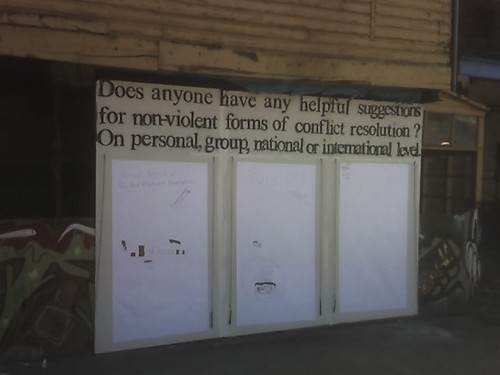
Tuesday, July 11, 2006
May the Daily Mail be minced, slowly
I managed to catch a bit of the event by Alertnet (linked right), whose Media Player stream was inaccessible until someone in Caifornia helpfully supplied a stream which was usable across platforms.
As we at Never Again in London are hoping to host a seminar which looks at many of the same issues, I was interested to see how they approached the topic and honestly, whether it was worth putting ours on at all.
They had a catchy hook for the event - on reporting about children in the most dangerous places, but this seemed to lead to disappointment from many of the bloggers listening when the debate turned mainly on the operations of NGOs and the press rather than child voices. The section I heard most clearly involved a journalist criticising the luxurious conditions in which NGOs operate in. And everyone laughed. The other clear message, from the Daily Mail at least, was that 'our readers' aren't interested in local voices. They want to know what their familiar white commentators have to say on an issue, they want to see people just like them, caught in a crisis.
The newspapers often convey this clear impression of their readers desires but I've rarely seen them test it. Their readers are generally portrayed as being as callous as they are in the newsroom or otherwise fleeing, 'switching off' from the hopeless and the bad. And yet that doesn't stop them flogging lame Labour government stories at us every day.
I read Global Voices most days and would be amazed if there wasn't a huge audience for this well edited, interesting content that synthesises points of views and colours news with experience. The bleak every day reality of daily bombings is rarely hopeless if you take with it the humour and good nature of real people who, I barely need remind you, live with this reality every day. From Israel to Rwanda, it is the countries with the greatest turmoil that show those of us in the fat west that life is to be lived.
Journalists don't give their readers the chance to be interested in humanitarian crises because they're all lazy. The woman from the Mail, I shall call her simply *that woman*, proved it as she mentioned that blogs are "notoriously unreliable". Which in a world of *millions* of blogs is even more ridiculous than calling all journalists lazy. You might as well call all people liars, unless they work for the Daily Mail. Many blogs are unreliable, as White Llama fans well know, but many just tell the truth as they see it. Not unlike journalists.
A rather angry blogosphere was much diminished by the end of the seminar, when the IRC representative suddenly fired a shot across the room which, I hope, will bring a slight chill to mainstream newsrooms across the country. As the seminar had been going on, a series of bombs across India - as large in their scale as the London bombs which still dominate the British press - were being reported and depicted on the web, eyewitnesses were Skypecasting and Flickring, bloggers were beng heard, more bloggers were synthesising, hours before the newspapers will hit the stands. Not for the web the inanity of repetitive, mawkish rolling coverage, the voices and images of that news will be heard on the web. The room erupted into applause, proving that the passion is in the blogosphere and the press is being trodden underfoot; chip paper today.
So what, you undoubtedly wanted to know paragraphs ago, does all this mean for our seminar to discuss media and the Responsibility to Report? Almost certainly that it's like trying to stuff ten cats into a sack (forgive the simile, it's not real). Possibly that it's time for the mainstream media to seriously start engaging in the conversation before they find that all their readers have gone.
Now, I'm riddled with hostility towards the British newspaper industry. I hate hate hate it and the likes of that woman. This isn't good. I accept a pressing need for work on the conflict inside myself. After all, mainstream news organisations provides the money for journalism and I'm in absolutely no doubt that we need journalists. A democracy means paying the people who ask the questions as much as we pay the people who make the decisions. Journalism is a lot more than simply a collection of what people want to write, it is often about exposing what nobody wants to read. Like many spheres, it isn't the people who are evil, but the structures that lead people to decide that genocide isn't news until the victims look more like 'us'. That's the dilemma I hope we will be able to make progress on.
Oh and as for the children? Give them all blogs. Record their stories, their views. The Daily Mail ain't interested in you, little ducks, but plenty of others will be.
As we at Never Again in London are hoping to host a seminar which looks at many of the same issues, I was interested to see how they approached the topic and honestly, whether it was worth putting ours on at all.
They had a catchy hook for the event - on reporting about children in the most dangerous places, but this seemed to lead to disappointment from many of the bloggers listening when the debate turned mainly on the operations of NGOs and the press rather than child voices. The section I heard most clearly involved a journalist criticising the luxurious conditions in which NGOs operate in. And everyone laughed. The other clear message, from the Daily Mail at least, was that 'our readers' aren't interested in local voices. They want to know what their familiar white commentators have to say on an issue, they want to see people just like them, caught in a crisis.
The newspapers often convey this clear impression of their readers desires but I've rarely seen them test it. Their readers are generally portrayed as being as callous as they are in the newsroom or otherwise fleeing, 'switching off' from the hopeless and the bad. And yet that doesn't stop them flogging lame Labour government stories at us every day.
I read Global Voices most days and would be amazed if there wasn't a huge audience for this well edited, interesting content that synthesises points of views and colours news with experience. The bleak every day reality of daily bombings is rarely hopeless if you take with it the humour and good nature of real people who, I barely need remind you, live with this reality every day. From Israel to Rwanda, it is the countries with the greatest turmoil that show those of us in the fat west that life is to be lived.
Journalists don't give their readers the chance to be interested in humanitarian crises because they're all lazy. The woman from the Mail, I shall call her simply *that woman*, proved it as she mentioned that blogs are "notoriously unreliable". Which in a world of *millions* of blogs is even more ridiculous than calling all journalists lazy. You might as well call all people liars, unless they work for the Daily Mail. Many blogs are unreliable, as White Llama fans well know, but many just tell the truth as they see it. Not unlike journalists.
A rather angry blogosphere was much diminished by the end of the seminar, when the IRC representative suddenly fired a shot across the room which, I hope, will bring a slight chill to mainstream newsrooms across the country. As the seminar had been going on, a series of bombs across India - as large in their scale as the London bombs which still dominate the British press - were being reported and depicted on the web, eyewitnesses were Skypecasting and Flickring, bloggers were beng heard, more bloggers were synthesising, hours before the newspapers will hit the stands. Not for the web the inanity of repetitive, mawkish rolling coverage, the voices and images of that news will be heard on the web. The room erupted into applause, proving that the passion is in the blogosphere and the press is being trodden underfoot; chip paper today.
So what, you undoubtedly wanted to know paragraphs ago, does all this mean for our seminar to discuss media and the Responsibility to Report? Almost certainly that it's like trying to stuff ten cats into a sack (forgive the simile, it's not real). Possibly that it's time for the mainstream media to seriously start engaging in the conversation before they find that all their readers have gone.
Now, I'm riddled with hostility towards the British newspaper industry. I hate hate hate it and the likes of that woman. This isn't good. I accept a pressing need for work on the conflict inside myself. After all, mainstream news organisations provides the money for journalism and I'm in absolutely no doubt that we need journalists. A democracy means paying the people who ask the questions as much as we pay the people who make the decisions. Journalism is a lot more than simply a collection of what people want to write, it is often about exposing what nobody wants to read. Like many spheres, it isn't the people who are evil, but the structures that lead people to decide that genocide isn't news until the victims look more like 'us'. That's the dilemma I hope we will be able to make progress on.
Oh and as for the children? Give them all blogs. Record their stories, their views. The Daily Mail ain't interested in you, little ducks, but plenty of others will be.
Friday, July 07, 2006
Having initally dithered over whether to go into London, I was quite upset to find all the trains in and out of Euston cancelled this morning and the announcer on the train telling people only to go to Euston if they 'had urgent appointments'. Just like last year. There was very mixed information at the station, whose staff didn't seem to have been told anything and so could only increase uncertainty.
With the patrols back and many sniffer dogs - though not guns - I thought this would be a quiet but calm day in London. It probably is. I'd rather be with a crowd of Londoners than in Stoke today.
Anyway, it could be worse. My thoughts are with the survivors and relatives today.
With the patrols back and many sniffer dogs - though not guns - I thought this would be a quiet but calm day in London. It probably is. I'd rather be with a crowd of Londoners than in Stoke today.
Anyway, it could be worse. My thoughts are with the survivors and relatives today.
Friday, June 23, 2006
Virgin: be nice
My evangelism for long-distance commuting took a bit of a dent this week when Virgin Trains suddenly withdrew the ticket option I had been buying, effectively putting the price up by £10 a day. This is because of the increasing popularity of many of the peak-time services.
Now, I will admit I was getting quite a good deal, paying just over £20 return most days to get to London and back. This is undoubtedly good value for the distance, as is £31 for a day-trip. It's a great service and very reliable. But for the commuter option, I had budgeted this year to pay around $4000, while the season ticket or daily return option is about £7000. My sense of what is reasonable to pay in travel or living has gradually been adjusting from my student days, when I spent about £5000 in rent with an income of £4,500, plus what I could get out of overdrafts, credit cards or temping in the summer. When I moved to Stoke from London, mortgage for a plus train travel was an equitable swap for renting a one bedroom flat with a nice dock.
So my perspectives on money are a bit different from people who spend their money on such things as clothes and CDs, though i have been gradually moving towards a position I would call a bit more normal. I spend about a third of my income now (after tax) on travel. On this basis, a season ticket will only become viable one I hit the over-£30,000 bracket, which isn't a sum quickly attained in my sectors. I'll remind you, in case you were just tempted to say 'move back to London' that the current average house price there is £270,000.
I gather fares to Birmingham and Manchester are subsidised to make it a shopping destination. The fact is, Stoke-on-Trent has next to no jobs in the professional sector as yet. Manchester and Birmingham have more, but for anything in journalism or NGOs, London is still the place to be. If Stoke is ever going to be viable as a place for professionals to move to - as is apparently the aim of the large sexy new developments - it needs to capitalise on its position as *the* place to easily escape from. A far nicer commute than Croyden, with house prices that are actually within reach of anybody under 35.
Stoke has a great quality of life: value for money, beautiful countryside and atmospheric heritage, good pubs, restaurants and theatres. It ain't a work destination yet. So my point, shot out to cyberspace where it can be ignored all the more publicly, is: lower the season ticket prices - £4000 is enough for a train company to make in a year, is it not?
Now, I will admit I was getting quite a good deal, paying just over £20 return most days to get to London and back. This is undoubtedly good value for the distance, as is £31 for a day-trip. It's a great service and very reliable. But for the commuter option, I had budgeted this year to pay around $4000, while the season ticket or daily return option is about £7000. My sense of what is reasonable to pay in travel or living has gradually been adjusting from my student days, when I spent about £5000 in rent with an income of £4,500, plus what I could get out of overdrafts, credit cards or temping in the summer. When I moved to Stoke from London, mortgage for a plus train travel was an equitable swap for renting a one bedroom flat with a nice dock.
So my perspectives on money are a bit different from people who spend their money on such things as clothes and CDs, though i have been gradually moving towards a position I would call a bit more normal. I spend about a third of my income now (after tax) on travel. On this basis, a season ticket will only become viable one I hit the over-£30,000 bracket, which isn't a sum quickly attained in my sectors. I'll remind you, in case you were just tempted to say 'move back to London' that the current average house price there is £270,000.
I gather fares to Birmingham and Manchester are subsidised to make it a shopping destination. The fact is, Stoke-on-Trent has next to no jobs in the professional sector as yet. Manchester and Birmingham have more, but for anything in journalism or NGOs, London is still the place to be. If Stoke is ever going to be viable as a place for professionals to move to - as is apparently the aim of the large sexy new developments - it needs to capitalise on its position as *the* place to easily escape from. A far nicer commute than Croyden, with house prices that are actually within reach of anybody under 35.
Stoke has a great quality of life: value for money, beautiful countryside and atmospheric heritage, good pubs, restaurants and theatres. It ain't a work destination yet. So my point, shot out to cyberspace where it can be ignored all the more publicly, is: lower the season ticket prices - £4000 is enough for a train company to make in a year, is it not?
Friday, June 02, 2006
Grafting research
British blogs are boring. And this one is no exception.
Today, from the joy of being able to type again (more on that later) but being too tired to actually think, I did a field audit. Sometimes the BNP and others say 'Britain is full'. Well, I'd like to challenge that. From my viewpoint on the train, there are times when there are no houses at all. You frequently go past vast stretches, filled with nothing but one rabbit, or a pheasant. Britain, I can assure you, is not full. So that was my hypothesis and here are my results. I think this is an audit, but it might be something else. A tedium, perhaps.
The White Llama field audit I
(yes, I might do this again, it was such fun)
The count was carried out this morning, June 2, a Friday. I travelled southwards from Stoke-on-Trent and looked Eastwards (right) from a fabulous tilting Virgin Pendolino.
I tried to count each field. A ‘-‘ means the field was empty. Each dash represents often a big field, so bear with my joy upon seeing a sheep after many, many empty fields. I'm not a numbers person, so my estimates are a little like the tribes whose words for numbers are 'one, two, several'. I recorded everything I noticed, but my perspectives are quite narrow. I didn't record every tree or house, that would have been pointless! Places are in brackets. I drifted off somewhere after Rugby.
(Britannia Stadium), one crow, - - - - - - - more than 50 sheep! More that 30 sheep, - (Stone)
.- - houses, houses, - one cow, 7 cows, - 1 walker, - 10 cows, trees, several sheep, - - 100s of sheep, forest, - 12 cows, - - - - - 1 pigeon, - - - - - 9 sheep and 1 crow, - - 1 ornamental cow, 3 horses, 4 horses, 1 horse, some shetland ponies, 1 horse, a village, cliffs, - - 1 blackbird, some bright roses, - houses, (Colwich), - sheep and cows, - - many cows, 5 sheep, lake, - - - - - settlement, - - - a cluster of sheep, full of sheep and geese, houses, - - - - - diggers, - cluster of cows, 5 horses, 100 sheep, - lakes, - - - - - - - - 12 cows, - 2 horses, - - - - - - - - many cows, - sewage farm, diggers, houses, man with dog, rugby goalposts, more houses, curious junction of trains, - - 3 crows, - - geese (Canadian), lake, cows, lake, - lots of cows, - - - - proper growing fields, - - - - TNT big depot, sign 102 miles to London, town... - 2 crows, clustre o traffic cones, 5 horses, strange processing plant, - bird of prey! - 5 horses, - - farm, - - rugby post, (Nuneaton), allotments, still Nuneaton... - - - 2 horses, 3 horses - sprawling suburbs, - - - - a balloon?, - 4 horses, - - - - - - 1 crow, - - - many sheep, a few horses, - - - - 7 sheep, - - - - many black birds, lots of cows, sheep, more cows, - 2 pigeons, - - houses, a row of cows, water place (Severn Trent), RUGBY! Rail stuff, - - the first church noticed, forest of aerials and spying equipment, horses, cows (many), several cows, BIG cows, - - - - - M1, - at this point I became concerned about whether this was fruitful exercise, marina, - - and sleep.
Next week, if you’re very lucky, you might get the post Rugby stretch.
Today, from the joy of being able to type again (more on that later) but being too tired to actually think, I did a field audit. Sometimes the BNP and others say 'Britain is full'. Well, I'd like to challenge that. From my viewpoint on the train, there are times when there are no houses at all. You frequently go past vast stretches, filled with nothing but one rabbit, or a pheasant. Britain, I can assure you, is not full. So that was my hypothesis and here are my results. I think this is an audit, but it might be something else. A tedium, perhaps.
The White Llama field audit I
(yes, I might do this again, it was such fun)
The count was carried out this morning, June 2, a Friday. I travelled southwards from Stoke-on-Trent and looked Eastwards (right) from a fabulous tilting Virgin Pendolino.
I tried to count each field. A ‘-‘ means the field was empty. Each dash represents often a big field, so bear with my joy upon seeing a sheep after many, many empty fields. I'm not a numbers person, so my estimates are a little like the tribes whose words for numbers are 'one, two, several'. I recorded everything I noticed, but my perspectives are quite narrow. I didn't record every tree or house, that would have been pointless! Places are in brackets. I drifted off somewhere after Rugby.
(Britannia Stadium), one crow, - - - - - - - more than 50 sheep! More that 30 sheep, - (Stone)
.- - houses, houses, - one cow, 7 cows, - 1 walker, - 10 cows, trees, several sheep, - - 100s of sheep, forest, - 12 cows, - - - - - 1 pigeon, - - - - - 9 sheep and 1 crow, - - 1 ornamental cow, 3 horses, 4 horses, 1 horse, some shetland ponies, 1 horse, a village, cliffs, - - 1 blackbird, some bright roses, - houses, (Colwich), - sheep and cows, - - many cows, 5 sheep, lake, - - - - - settlement, - - - a cluster of sheep, full of sheep and geese, houses, - - - - - diggers, - cluster of cows, 5 horses, 100 sheep, - lakes, - - - - - - - - 12 cows, - 2 horses, - - - - - - - - many cows, - sewage farm, diggers, houses, man with dog, rugby goalposts, more houses, curious junction of trains, - - 3 crows, - - geese (Canadian), lake, cows, lake, - lots of cows, - - - - proper growing fields, - - - - TNT big depot, sign 102 miles to London, town... - 2 crows, clustre o traffic cones, 5 horses, strange processing plant, - bird of prey! - 5 horses, - - farm, - - rugby post, (Nuneaton), allotments, still Nuneaton... - - - 2 horses, 3 horses - sprawling suburbs, - - - - a balloon?, - 4 horses, - - - - - - 1 crow, - - - many sheep, a few horses, - - - - 7 sheep, - - - - many black birds, lots of cows, sheep, more cows, - 2 pigeons, - - houses, a row of cows, water place (Severn Trent), RUGBY! Rail stuff, - - the first church noticed, forest of aerials and spying equipment, horses, cows (many), several cows, BIG cows, - - - - - M1, - at this point I became concerned about whether this was fruitful exercise, marina, - - and sleep.
Next week, if you’re very lucky, you might get the post Rugby stretch.
Friday, May 19, 2006
Happy Friday
"Doing it all for the wonderful Clare White, every Friday."
- The Friday Thing
Of course, other Clare Whites are available, so I don't *know* that this is for me, but it's cheered me up no end anyway.
I've been meaning to give The Friday Thing a plug for a while, it pops into the inbox each Friday and is brilliant. I have to do something complicated to the formatting now to print it out since saying (sigh) farewell to Treo, otherwise it comes to 36 printed pages. It provides constant entertainment well beyond Rugby (one for their quotes column there). It also tells you a lot you no longer get round to reading in the newspapers because they're such nonsense. I have in common with them the preference for emphatic stars and wonder if they too have the irritation of having to say no, I *really* mean stars, when clever email programmes do their own formatting. I have generally been inspired by them every week in various ways, many plagiarous (sp? real word?).
It is one of the very few things I subscribed to, paying some forgotten amount of money ages ago for some magazine. I had concluded that I would pay for it again if their subscription system was up to asking me but this week they announced that I don't have to. TFT is going free. As some readers know, I have a bit of a belief in subscription-based fine writing, so I'm hoping they have an alternative model that is based on them selling enugh words to pay their writers. They probably do, the lovely chaps.
Anyway, enough gushing or I'll become a target for mockery. Fickle, fickle TFT.
- The Friday Thing
Of course, other Clare Whites are available, so I don't *know* that this is for me, but it's cheered me up no end anyway.
I've been meaning to give The Friday Thing a plug for a while, it pops into the inbox each Friday and is brilliant. I have to do something complicated to the formatting now to print it out since saying (sigh) farewell to Treo, otherwise it comes to 36 printed pages. It provides constant entertainment well beyond Rugby (one for their quotes column there). It also tells you a lot you no longer get round to reading in the newspapers because they're such nonsense. I have in common with them the preference for emphatic stars and wonder if they too have the irritation of having to say no, I *really* mean stars, when clever email programmes do their own formatting. I have generally been inspired by them every week in various ways, many plagiarous (sp? real word?).
It is one of the very few things I subscribed to, paying some forgotten amount of money ages ago for some magazine. I had concluded that I would pay for it again if their subscription system was up to asking me but this week they announced that I don't have to. TFT is going free. As some readers know, I have a bit of a belief in subscription-based fine writing, so I'm hoping they have an alternative model that is based on them selling enugh words to pay their writers. They probably do, the lovely chaps.
Anyway, enough gushing or I'll become a target for mockery. Fickle, fickle TFT.
Monday, May 15, 2006
Basic beliefs
I know I’m not the only one who feels they should be more proactive about getting their point of view across to decision-makers about the issues we care about. I have a rolling list of things to write to my MP about and am thus put off by the fact that it is too long.
But I also slightly resent the fact that it is these expressions of public interest that are deemed to be the most effective in Getting Things Done. In most cases, it seems a bit silly to be writing to my MP with sentiments like ‘I feel very strongly that the killing of hundreds of thousands of innocent civilians in Darfur should be stopped’ so that some parliamentary assistant can put it in the pile marked ‘against genocide’, stacked up against the Friends of Khartoum amongst Stoke’s populus.
Couldn’t the UN organise a massive survey to once and for all ascertain everyone’s views on certain key issues? They could then use this to spur governments into action at appropriate moments. It could go something like this:
* Should carpet/suicide-bombing, murder, rape or torture be allowed, ever? When answering this, bear in mind that the victim could be you next.
* Should people be locked up without trial, or should we find out if they’re guilty, just to be absolutely clear in our own minds?
* Should the trafficking of human beings for sexual or other forms of labour be tolerated in a free market global society, or should we come down on it like a ton of bricks?
* Should we allow countries to run their own countries in a way that has the consent of the people (with the option of peacefully protesting to show opposition if they wish), or should we use the supply of food aid as a gentle incentive to push out the democratically elected leaders we don’t like?
* How many deaths, by whatever means but lets start with starvation and civilian killings, are acceptable, before action is taken to stop the deaths?
a) More than 2 b) More than 500 c) More than 5,0000 d) More than 500,000 e) It depends on the country
Finally, one from the Sun
* Should the Human Rights Act be scrapped?
You can probably still vote on the Sun’s website, unless they’ve taken it down now - the vote when I looked was 81 per cent saying "er, *no*", which didn’t seem to be the answer they were looking for.
Answers to be returned to the UN, New York.
But I also slightly resent the fact that it is these expressions of public interest that are deemed to be the most effective in Getting Things Done. In most cases, it seems a bit silly to be writing to my MP with sentiments like ‘I feel very strongly that the killing of hundreds of thousands of innocent civilians in Darfur should be stopped’ so that some parliamentary assistant can put it in the pile marked ‘against genocide’, stacked up against the Friends of Khartoum amongst Stoke’s populus.
Couldn’t the UN organise a massive survey to once and for all ascertain everyone’s views on certain key issues? They could then use this to spur governments into action at appropriate moments. It could go something like this:
* Should carpet/suicide-bombing, murder, rape or torture be allowed, ever? When answering this, bear in mind that the victim could be you next.
* Should people be locked up without trial, or should we find out if they’re guilty, just to be absolutely clear in our own minds?
* Should the trafficking of human beings for sexual or other forms of labour be tolerated in a free market global society, or should we come down on it like a ton of bricks?
* Should we allow countries to run their own countries in a way that has the consent of the people (with the option of peacefully protesting to show opposition if they wish), or should we use the supply of food aid as a gentle incentive to push out the democratically elected leaders we don’t like?
* How many deaths, by whatever means but lets start with starvation and civilian killings, are acceptable, before action is taken to stop the deaths?
a) More than 2 b) More than 500 c) More than 5,0000 d) More than 500,000 e) It depends on the country
Finally, one from the Sun
* Should the Human Rights Act be scrapped?
You can probably still vote on the Sun’s website, unless they’ve taken it down now - the vote when I looked was 81 per cent saying "er, *no*", which didn’t seem to be the answer they were looking for.
Answers to be returned to the UN, New York.
Subscribe to:
Posts (Atom)